



Why Are Copper Products Tinned?

In short: Tinning of copper products is done, especially for items used for cooking and storage, to block direct contact between the copper and the food. This process prevents reactions that could occur between acidic food and beverages and the copper, ensuring the products can be used safely.
- Copper cookware is tinned to prevent contact with acidic foods and ensure healthy use.
- The traditional tinning process involves coating the inner surface of the copper with pure tin and requires periodic renewal.
- To extend the lifespan of tinned copper products and ensure their safety, washing by hand and using non-abrasive cleaners is essential.
Tinning copper products is vital for safe and healthy use in the kitchen. Specifically, the inner surfaces of copper items used for cooking and storage are coated with a thin layer of tin to block direct contact between the copper and the food and to prevent potential reactions. This traditional method both preserves the natural beauty of the copper and extends the lifespan of the products.
Copper and Food Contact: Why Is It Important?
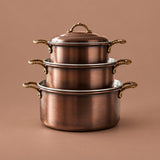
Copper can react when in prolonged contact with acidic food and beverages; therefore, surfaces that come into contact with food must be tinned. When copper interacts with acidic foods such as lemon, vinegar, or tomatoes, it can lead to the leaching of copper ions into the food. This can result in undesirable health consequences. Copper has a significant place in our traditional culinary culture, but using it correctly is essential. Products like the Black 4-Piece Hand-Engraved Tinned Pure Copper Pot Set we produce in our workshop in Gaziantep are carefully tinned with this sensitivity in mind. In every tinning process, the inner surface of the copper must be completely covered with tin, and the copper itself must not be visible. This is not just an aesthetic concern, but also a safety measure.
How Is the Tinning Process Done? Tips from a Master Coppersmith
Tinning is the process of coating the inner surfaces of copper products with pure tin using a special melting technique. This process is a craft passed down through generations and requires mastery. In our workshop, we apply the following steps while meticulously tinning each of our copper products:
- Cleaning and Preparation: The copper product is thoroughly cleaned and cleared of dirt and oil before tinning. It is very important that the surface is smooth and spotless so that it can hold the tin homogeneously.
- Heating: The cleaned copper product is carefully heated over a high flame. Reaching the correct temperature is critical for the tin to spread evenly and in a thin layer across the copper surface. Excessive heat can damage the structure of the tin, while insufficient heat can prevent it from adhering.
- Tin Application: When the copper reaches the desired temperature, the molten pure tin is carefully and quickly spread across the inner surface of the copper with the help of a special cotton pad or cloth. At this stage, it is ensured that the tin reaches every point and the copper is not visible. Our craftsmen who perform this process in our workshop ensure that the tin is spread evenly to every corner of each product, such as a 16 cm Engraved Silver-Color Tinned Pure Copper Sahan or a 1.5 L Black Handmade Tinned Copper Pitcher with Lid.
- Cooling and Polishing: The tinned product is left to cool naturally so that the tin can harden. After cooling, the outer surface is polished to its final state and becomes ready for use.
When tinning in our workshop, we pay special attention to the thickness of the tin layer. It should neither be too thin, causing it to wear out quickly, nor too thick, which would affect the copper's natural heat conductivity. This balance is achieved through experience and accumulated knowledge.

When Should Tin Coating Be Renewed?
Tin coating can wear or scratch over time depending on use, cleaning habits, and the types of food cooked; in such cases, it must be renewed for safe use. When the color of the tin changes (darkening, graying) or when scratches and wear appear, causing the copper itself to become visible, it is time for renewal. This period may vary depending on intensive use. For example, if a 2 L Red Oval Engraved Tinned Pure Copper Teapot is used daily, the tin should be checked more frequently and shown to an expert when necessary.
You can examine the table below to better understand the differences between tinned and untinned copper products:
| Feature | Tinned Copper Products | Untinned Copper Products |
|---|---|---|
| Food Contact | Safe, prevents copper ion leaching. | May react with acidic foods. |
| Usage Area | Cooking, serving hot/cold drinks, storage. | For dry or non-liquid foods only, decoration. |
| Maintenance | May require periodic tin renewal. | Requires no special maintenance; polishing the outer surface is sufficient. |
| Sample Products | Pots, coffee pots, sahans, tinned pitchers, teapots. | Copper trays, Copper Bracelets, decorative objects, Copper Cups used for water. |
Care for Copper Products and Tips for Safe Use
Knowing the correct maintenance methods is important to extend the life of your copper products, preserve their aesthetic beauty, and, most importantly, use them safely. Here are some practical tips our masters in Gaziantep have learned through years of experience:
- Washing by Hand is Essential: Never wash your copper products in the dishwasher. The harsh chemicals and high temperatures of the dishwasher can damage both the outer surface of the copper and shorten the life of the tin coating, or even cause it to strip away completely. Wash by hand with warm water and a soft sponge.
- Avoid Using Chemicals: Stay away from abrasive cleaners like bleach or spirits of salt. These disrupt the natural structure of the copper and cause irreparable damage to the tin layer. Choose natural soaps or products specifically produced for copper cleaning.
- Be Careful with Acidic Foods: Do not leave acidic foods and drinks like lemon, vinegar, or tomatoes in untinned copper products for a long time. If you are using a tinned product, ensure the tin is intact and not worn. Do not cook or store acidic foods in a product with a damaged tin coating.
- Watch Out for Metal Utensils: To avoid scratching tinned surfaces and damaging the coating, use wooden or silicone utensils instead of metal spoons or spatulas. Even a small scratch can cause the copper underneath the tin to be exposed and lead to potential reactions.
- Proper Storage: Dry your copper products thoroughly after use and store them in a dry, airy place away from moisture. Moisture can accelerate the oxidation of copper, causing it to tarnish.
- Natural Polishing Methods: To remove natural tarnish from the outer surface of copper, you can use the traditional method of a lemon and salt mixture. Cut a lemon in half, sprinkle salt on it, and rub the copper surface; then rinse and dry. We recommend this method to our customers in our workshop as it is a natural solution that contains no chemicals.
Traditional Copper Craftsmanship from Gaziantep
Gaziantep is one of the cities where the heart of the coppersmith trade beats. As "Usta Bakırcı" (Master Coppersmith), we are proud to keep this deep-rooted tradition alive and bring it to your tables. In our workshop, we produce our handmade pure copper products using traditional methods and knowledge passed down from generation to generation. Each flask, coffee pot, teapot, pot, pitcher, cup, tray, and bracelet is a work of art from the hands of our masters.
The tinning process is also an important part of this craft. Each of our products, engraved with traditional motifs and shaped with the hammering technique, is not just a kitchen utensil but also a carrier of cultural heritage. For example, our handcrafted Black 4-Piece Hand-Engraved Tinned Pure Copper Pot Set combines aesthetics with safe use due to its tinned structure. To us, every product is a reflection of our masters' sweat and dedication to art.
The place of copper products in our kitchens is not limited to their aesthetic beauty; when used and maintained correctly, they are also the key to healthy and delicious meals. As Usta Bakırcı, we continue to add both safe and traditional touches to your tables with the importance we place on the art of tinning. You can visit our Pots and Pans or Pitchers categories to discover all our tinned and untinned copper products.
Master's Note
When tinning in our workshop, we ensure that the tin is completely and evenly spread across the copper surface. The thickness of the tin layer is of great importance in terms of the product's lifespan and heat conductivity, which is why we approach each piece with the same care.
Products Mentioned in the Article


Frequently Asked Questions
Why are copper products tinned?
Copper products, especially those intended for cooking and storage, are tinned to prevent copper ions from leaching into food when they come into contact.
How long does it take for tin coating to be renewed?
The time for renewing the tin coating depends on the frequency of use and the maintenance of the product; generally, it should be renewed if the tin darkens or becomes scratched.
Are tinned copper products dishwasher safe?
No, tinned copper products should not be washed in the dishwasher because the machine's high temperature and chemicals can damage the tin coating.
Which copper products do not need to be tinned?
It is not mandatory to tin copper products that do not come into prolonged contact with food, such as trays used for decorative purposes, bracelets, or cups used only for water.
Can you cook food in untinned copper products?
It is not recommended to cook or keep acidic foods and beverages in untinned copper products for a long time, but they can be used for dry foods and decorative purposes.
Discover: Pots and Pans
Best Sellers


