



How Does a Copper Pot Distribute Heat?

In Brief: Copper pots distribute heat rapidly and extremely uniformly across their surface, as copper possesses the highest thermal conductivity among metals. This ensures even cooking across every point of the pot, reduces the risk of food burning at the bottom, and preserves flavors.
- Thanks to its superior thermal conductivity, copper spreads heat evenly and quickly throughout the pot.
- Copper pots that are properly gauged and tinned prevent food from burning while enhancing cooking quality.
- For the longevity of copper pots, hand washing, avoiding prolonged exposure to acidic foods, and periodic tinning checks are essential.
Copper pots distribute heat rapidly and extremely uniformly across their surface, as copper possesses the highest thermal conductivity among metals. This ensures even cooking across every point of the pot, reduces the risk of food burning at the bottom, and preserves flavors. Handcrafted in our workshop in Gaziantep, our pure copper pots add a unique touch to your meals thanks to this exceptional property.
Why Do Copper Pots Distribute Heat So Well?
Copper pots distribute heat with extraordinary speed and uniformity because copper is the second-best thermally conductive metal after silver. This property stems from copper’s atomic structure; its free electrons rapidly carry thermal energy through the material, ensuring it reaches every part of the pot simultaneously.
A Pro-Tip from Gaziantep Masters: Copper Thickness and Hand-Hammering
- Material Thickness: The wall thickness of a copper pot directly affects the uniformity of heat distribution. While very thin copper pots conduct heat quickly, they can create hot spots, causing food to burn in certain areas. In our workshop, we use pure copper with a minimum thickness of 1.5 mm to ensure both rapid and balanced heat distribution. For example, products like our Traditional Rice Pot Red Hammered Pure Copper Hand-Crafted 20-25 cm maintain this thickness standard.
- Hand-Hammering: Hammering copper by hand increases the density of the metal and reinforces its molecular structure. This process further optimizes thermal conductivity while enhancing the durability of the pot. Hand-hammering also creates small indentations and elevations on the surface, which can slightly increase the surface area for heat transfer.
This superior conductivity of copper makes a difference, especially in dishes like sauces, rice, and desserts that require precise temperature control. Heat rises rapidly from the bottom of the pot to the sides, ensuring the entire dish cooks simultaneously and evenly. This helps food retain its nutritional value and natural flavors.
What is the Effect of Heat Distribution in Copper Pots on Cooking Quality?
The high-quality heat distribution in a copper pot directly improves the cooking process, resulting in more flavorful, better-textured meals. This makes copper indispensable for professional chefs and home cooks who are dedicated to traditional cuisine.
- Even Cooking: Thanks to the rapid and homogeneous heat distribution of copper, "hot spots" do not form anywhere in the pot. This ensures that every part of the food cooks simultaneously and equally. For instance, when using a Rice Pot, you will notice that your rice is fluffy and every grain is cooked to the same degree.
- Preventing Sticking/Burning: The even spread of heat significantly reduces the risk of food sticking to the bottom or burning. This is a major advantage when cooking delicate items such as milk-based desserts, sauces, or rice.
- Fast Cooking and Energy Efficiency: Because copper conducts heat very quickly, the pot reaches the desired temperature in a short time. This shortens cooking times and, consequently, reduces energy consumption. In traditional kitchens, copper is preferred to save time while preserving the flavor of meals.
- Preserving Flavor: The even and controlled cooking of food helps it better retain its natural aroma and nutritional value. While overheating or burning can ruin the flavor of food, copper pots minimize this risk.
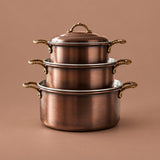
Sets like the Heavy Patterned Black Hand-Crafted Pure Copper Pot Set (3 sizes) that we offer as Usta Bakırcı are carefully designed to bring these advantages into your kitchen. Quality copper turns your time in the kitchen into a pleasure.

What is the Importance of Tin Lining in Copper Pot Usage?
Tin lining is vital for both safety and cooking performance when using copper pots. All pots and pans produced in our workshop in Gaziantep have their inner surfaces lined with pure tin using traditional methods.
Why Tin Lining?
Copper tends to oxidize when in direct contact with acidic foods (lemon, vinegar, tomatoes, etc.). The copper salts formed as a result of this oxidation can leach into food, potentially creating unwanted health issues. Tin, unlike copper, is an inert metal that does not react with acidic foods and is suitable for food contact. Therefore, the tin lining acts as a barrier so you can use your copper pot safely.
Benefits of Tin Lining:
- Health and Safety: Tin prevents direct contact between copper and food, blocking copper ions from leaching into the meal. This is particularly important for long cooking processes or when preparing acidic foods.
- Cooking Performance: Although tin is not as good a heat conductor as copper, when applied as a thin layer, it does not compromise copper’s superior heat distribution property. On the contrary, it provides a non-stick surface, making cooking easier and simplifying cleaning.
- Durability and Maintenance: A well-maintained tin lining extends the life of your pot. However, over time or due to improper use, the tin lining can become damaged. In such cases, your pot needs to be re-tinned. In our workshop, we meticulously apply this traditional tinning process. For example, our 3-Size Hand-Made Tinned Pure Copper Black Pot set is noted for its long-lasting tin lining.
Important Safety Warning:
Avoid leaving acidic foods and drinks (lemon, vinegar, tomatoes) in non-tinned copper vessels for long periods. If the tin lining becomes scratched or worn, it is important to have your pot re-tinned. Our masters in Gaziantep will always be happy to assist you with this.
How to Maintain Copper Pots and Extend Their Life?
If you want your copper pot to distribute heat like it did on the first day and ensure it lasts, following proper maintenance routines is vital. Traditional handcrafted copper pots can be used for generations with the right care.
Steps for Copper Pot Maintenance:
- Hand Washing: Never wash your copper pots in the dishwasher. The harsh detergents and high heat of dishwashers can damage the surface of the copper and the inner tin lining, dulling its color or causing it to tarnish. Hand wash with warm water, a soft sponge, and a mild dish detergent.
- Do Not Use Abrasives: Avoid using wire brushes, bleach, or abrasive cleaners when cleaning your copper pots. Such materials can scratch the outer surface of the copper and damage the inner tin lining.
- Drying: Immediately after washing, dry your pot thoroughly with a soft cloth. Water spots or oxidation can occur on wet copper surfaces.
- Polishing the Exterior: The exterior of copper can oxidize over time, becoming dull or tarnished. This is a natural process. You can periodically polish it using copper polishing creams or traditional methods (a mixture of vinegar and salt, or lemon and baking soda). Make sure to rinse and dry thoroughly after polishing.
- Tinning Check: Regularly check the tin lining inside your pot. If you see scratches, wear, or areas where the copper is visible, you need to have your pot re-tinned. It is important to have this done by a professional coppersmith. Generally, depending on frequent use, tin renewal may be needed every 1-2 years.
- Storage: Store your copper pots in a dry and airy place. Humid environments can accelerate the oxidation of copper.
By following these simple steps, you can maintain the beauty and functionality of your copper pots and pans for many years. Our workshop masters are always ready to provide consulting services regarding the maintenance of copper products.
What Sets Gaziantep Handcrafted Copper Pots Apart?
Gaziantep is one of the most deep-rooted and vibrant centers of the art of coppersmithing in Turkey. As Usta Bakırcı, we are a part of this tradition and keep this legacy alive with every handcrafted copper pot we produce. The difference of Gaziantep coppersmithing represents not just craftsmanship, but a wealth of knowledge and a tradition of mastery spanning centuries.
Features That Make Gaziantep Coppersmithing Special:
- Traditional Methods: In Gaziantep, copper pots are still largely produced using traditional methods, hammering, and tinning techniques. Each piece is crafted by the hands of masters, gaining a personal touch and character. These methods enhance the durability of the copper while optimizing heat distribution properties.
- Use of Pure Copper: Only the highest quality, pure copper sheets are used in our workshop. This ensures that our pots are not only aesthetically pleasing but also functionally superior. Pure copper is the form that conducts heat best.
- Mastery and Experience: The art of coppersmithing is a profession passed down from generation to generation in Gaziantep. The skill our masters have acquired through years of experience ensures that each of our pots possesses perfect workmanship. Every hammer blow adds both form and function to the copper.
- Aesthetic and Artistic Value: Handcrafted copper pots are not just kitchen utensils, but also works of art. The rich cultural motifs and engravings of Gaziantep add a unique aesthetic to our pots, bringing a traditional atmosphere to your kitchen. For instance, our 3-Size Hand-Made Tinned Pure Copper Black Pot set stands out with both its functionality and visual beauty.
- Durability: Thanks to the hand-hammering technique and the choice of high-quality materials, Gaziantep copper pots are extremely durable. With proper care, these pots continue to be a staple in your kitchen for many years.
Every copper pot from Gaziantep is not just a cooking tool, but also a story, a legacy, and a work of art. For those who want to capture traditional flavors in the kitchen, handcrafted Gaziantep copper pots are a unique choice.
You now know how copper pots expertly distribute heat and add a unique flavor to your meals. You can visit our store to explore our range of pots and pans, produced with manual labor and pure copper, inspired by Gaziantep’s deep-rooted coppersmithing tradition. You can also browse our best-sellers and trending products categories to review our items that will add both a traditional touch and superior cooking performance to your kitchens.
Master’s Note
In every copper pot we produce in our workshop, we place great importance on selecting materials of appropriate thickness and using hand-hammering techniques to make the best use of copper's natural heat-distributing properties. Remember that a good copper pot is not just a cooking tool, but a part of your kitchen that can be used for generations with proper care.
Products Mentioned in the Article


Frequently Asked Questions
How quickly do copper pots distribute heat?
Copper conducts heat so quickly that heat from the base of the pot spreads across the entire surface within seconds. This is much faster than other metals and is immediately noticeable when you start cooking.
Is cooking in a copper pot healthy?
Yes, it is healthy to cook in tin-lined copper pots. The tin prevents the copper from coming into direct contact with food, blocking potential copper ion migration. Regular inspection and maintenance of the tin lining are important.
What dishes are copper pots ideal for?
Copper pots are ideal for sauces, milk-based desserts, rice, and stews that require precise temperature control. Their ability to distribute heat evenly allows food to cook homogeneously without sticking to the bottom.
Can copper pots be washed in the dishwasher?
No, copper pots should never be washed in the dishwasher. The harsh detergents and high heat of dishwashers can damage the exterior and the inner tin lining, shortening the product’s life and ruining its appearance.
When should the tin lining inside a copper pot be renewed?
The frequency of tin lining renewal depends on use, but it is generally recommended to check it every 1-2 years with frequent use. If you notice scratches, wear, or places where the copper is showing, you should have it re-tinned immediately for safety and performance.
Discover: Pots and Pans
Best Sellers


