



Tips for Cooking in Copper Pots

In brief: Cooking in a copper pot offers a unique culinary experience thanks to its excellent heat distribution and ability to preserve traditional flavors. Choosing the right tinned copper pot, cooking over low-to-medium heat, and being mindful of contact with acidic foods will enhance both the flavor of your meal and the lifespan of your pot.
- Copper pots distribute heat quickly and evenly, ensuring dishes cook more deliciously.
- Tin lining is a vital feature that allows copper pots to be used safely with acidic foods.
- Using proper cleaning and maintenance methods is crucial to extending the life of your copper pots.
Cooking in a copper pot adds not only an aesthetic touch to the kitchen but also the privilege of imparting a unique flavor and texture to dishes, thanks to its ability to distribute heat perfectly. These special pots, crafted by the hands of masters carrying on the deep-rooted coppersmithing tradition of Gaziantep, can become a kitchen companion that lasts for generations when used correctly.
What Are the Basic Rules of Cooking in a Copper Pot?
The basic rules for cooking in a copper pot begin with heat control and the proper maintenance of your pot. Because copper conducts heat very quickly and evenly, it prevents your food from burning at the bottom and ensures everything cooks at the same time. However, this high conductivity also requires caution.
- Use Low and Medium Heat: Copper pots do not require high heat. Generally, medium or low heat will be sufficient for your food to cook to the ideal consistency. High heat can burn your food or damage the pot's tin lining.
- Protect the Tinned Surface: Copper pots with a tin-lined interior are essential for healthy and safe use. When cooking, take care to use wooden or silicone kitchen utensils instead of metal spoons or spatulas so that the tin is not scratched.
- Be Careful with Acidic Foods: Avoid leaving acidic foods such as lemon, tomato paste, or vinegar in a copper pot for long periods. Even if there is a tin lining, prolonged contact can cause the copper to react. It is best to transfer the food to another container immediately after cooking.
- Do Not Leave an Empty Pot on the Heat: Leaving an empty copper pot on the stove can both shorten the life of the pot and damage the tin lining. Always place it on the heat after putting something inside.
Which Dishes Taste Better in a Copper Pot?
Copper pots reveal their difference, especially in dishes that require precise heat management. Many classics of traditional Turkish cuisine make the best use of this feature of copper.
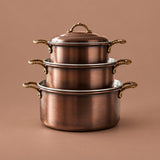
Especially in Ottoman and Anatolian cuisines, rice, stews, roasts, dishes with broth, and even jams take on a distinct flavor in copper pots. For example, a copper pot is ideal for rice that needs to simmer slowly; because it distributes heat evenly to every grain, it ensures the rice remains fluffy and distinct. Rice pots, frequently made in Gaziantep cuisine, are specially designed for such dishes. Additionally, you can prepare many traditional dishes of different sizes with copper pot sets.
Thanks to copper's rapid heat conduction, breakfast items like menemen or omelets made in pans also cook in a short time and to the perfect consistency. A staple of morning breakfasts, copper pans guarantee that your eggs turn out exactly as you like them.

What Should I Do Before Using a Copper Pot for the First Time?
There are some steps you should take before using a new copper pot for the first time, which both extends the life of your pot and ensures a healthy start.
- Wash Thoroughly: Gently wash your pot with warm water and a soft dish sponge. You can choose natural soaps instead of chemical detergents. It is important to clean away any dust or residue remaining from production.
- Dry: After washing, dry the pot immediately with a soft, cotton cloth. This step is critical to prevent water spots on the copper.
- Lightly Oil (Optional): Some masters recommend lightly greasing the inside of the pot with a very small amount of vegetable oil and heating it for a few minutes on low heat before the first use. This can help make the tin lining more durable. However, this step is not mandatory and should be done carefully.
- Check the Tin: Carefully inspect the interior surface of your newly purchased tinned copper pot. Ensure there are no scratches or wear on the tin. All copper pots and pans produced in our workshop in Gaziantep are delivered to you after passing these checks.
How to Clean and Maintain a Copper Pot?
Proper cleaning and maintenance methods are vital to preserving the shine and longevity of copper pots. Incorrect cleaning can damage the internal tin of your pot or cause the exterior to lose its luster.
Proper Cleaning Steps:
- Wash by Hand: Never put copper pots in the dishwasher. The high heat and harsh chemicals of the dishwasher will cause irreversible damage to the tin lining and darken the exterior surface of the copper. Always wash by hand using warm water and a mild dish soap.
- Use a Soft Sponge: Use a soft sponge or cloth instead of hard brushes or wire scrubbers when cleaning the interior and exterior surfaces of the pot. Especially, do not scratch the tinned interior surface.
- Natural Polishes: The exterior surface of copper can oxidize and darken over time. This is a natural occurrence. To restore its shine, you can use traditional methods instead of chemical polishes:
- Lemon and Salt: Cut a lemon in half and sprinkle some salt on it. Gently rub the exterior surface of the pot with this lemon. Then, rinse and dry.
- Vinegar and Salt/Flour Mixture: Create a paste by mixing some vinegar, salt, and flour. Apply this mixture to the outside of the pot, leave it for a few minutes, and then rub with a soft cloth. Rinse and dry.
- Dry Immediately: After washing, be sure to dry your pot immediately with a dry, soft cloth. This step is very important to prevent water spots and oxidation.
Maintenance Tips:
- Proper Storage: Keep your copper pots away from damp environments. You can store them by placing cloth or paper towels between them to prevent them from touching each other.
- Check the Tin: Regularly check the internal tin lining of your pot. If there is wear, scratches, or darkening in the tin, you may need to have your pot re-tinned. You can find masters who provide this service in copper workshops in Gaziantep. Tin forms a critical barrier for your health by preventing direct contact between the copper and acidic foods.
What Should I Pay Attention to While Cooking in a Copper Pot?
Some important points to consider while cooking in a copper pot will both improve the quality of your food and extend the life of your pot.
- The Importance of Tin Lining: Copper can react with food under certain conditions. For this reason, the interior surface of copper pots used for cooking must be coated with tin. Tin provides a safe cooking environment by forming a barrier between the copper and the food. If your pot's tin is worn or scratched, you should not use it without re-tinning.
- Short-term Cooking for Acidic Foods: When cooking dishes containing acidic ingredients such as tomatoes, lemon juice, or vinegar in a copper pot, ensure the tin lining is intact and, if possible, cook for a short time. After cooking is finished, transfer the food to a glass or ceramic container immediately. Avoid leaving it in the copper for a long time.
- Avoid High Heat: Since the thermal conductivity of copper is very high, medium or low heat is usually sufficient for cooking. High heat can burn your food and also damage your pot's tin lining.
- Take Care Not to Use Metal Utensils: Use wooden, silicone, or plastic spatulas to protect the tin lining on the interior surface of the pot. Metal spoons can scratch the tin and cause the copper to become exposed.
What Does Tinned Copper Pot Mean and Why Is It Important?
A tinned copper pot means the interior surface of the copper is coated with a thin layer of tin. This process is one of the most important elements of the coppersmithing tradition and plays a critical role in terms of both the safety and the service life of the pot.
Although copper has the property of conducting heat perfectly, it can react when it comes into contact with certain acids, releasing copper ions into food. This situation can lead to health problems, especially if acidic foods (such as tomatoes, lemons, or yogurt) remain in contact with the copper for a long time. This is where tin lining comes into play. Tin creates an inert, or non-reactive, barrier between the copper and the food, preventing direct contact.
As Usta Bakırcı, all copper pots we produce in our workshop are offered to you after being tinned. The integrity of the tin lining should be checked regularly to ensure that your pot can be used safely and healthily. When the tin layer wears down or gets scratched, the pot needs to be re-tinned. This process extends the life of your pot and preserves its value in your kitchen.
What Are the Tips for Extending the Life of a Copper Pot?
Copper pots are valuable kitchen heirlooms that can be passed down for generations when used with proper maintenance and care. Here are some practical tips you can apply to extend the life of your pot:
- Regular Tin Inspection and Renewal: Check the internal tin lining of your pot at least once a year or more frequently depending on the frequency of use. If you notice that the tin is wearing off or darkening, be sure to take it to an expert tin smith for re-tinning. This guarantees the safe use of your pot.
- Gentle Cleaning: As mentioned above, always wash by hand and use soft sponges. Absolutely stay away from aggressive cleaners, wire scrubbers, and the dishwasher.
- Proper Storage Conditions: Keep your pots in a dry and airy place, away from direct sunlight. You can stack them by placing protective cloths between them to prevent them from hitting each other. This both prevents scratches on the outer surface and slows down oxidation.
- Protection from Excessive Heat: Although copper pots provide fast cooking even at high heat, excessively high flames can damage the tin. Always be sure to cook over low or medium heat.
- Do Not Let Food Sit: After the food is cooked, do not leave it in the copper pot for a long time, especially acidic ones. Transfer to another storage container immediately. This helps protect the tin.
As Usta Bakırcı, we are here to help you bring traditional flavor to your kitchens with our copper pots and pans, produced with craftsmanship passed down for generations. Extending the life of these special products and capturing the same unique taste in every meal you make is possible with these tips we share from our masters' experience.
If you would like to feel the warmth of copper and the value of handcrafted work in your kitchens, you can take a look at our best-selling products or our new products. Each of our products is carefully handcrafted from pure copper in our workshop in Gaziantep.
Master's Note
The most important feature of every copper pot we hammer in our workshop is that it distributes heat evenly from the base to the rim. This ensures that every part of your meal cooks simultaneously and in a balanced way, which is the secret to flavor. Our masters always emphasize how critical the tin is for the life and safety of the pot.
Products Mentioned in the Article


Frequently Asked Questions
What kind of dishes can be cooked in a copper pot?
Copper pots are ideal for many traditional Turkish dishes that require heat control, such as rice, stews, roasts, dishes with broth, and jams. Breakfast items like menemen and omelets also turn out great in copper pans.
Why should a copper pot be tinned?
Copper pots are coated with tin on the interior surface to prevent the copper from reacting with acidic foods and to provide a healthy cooking environment. Tin acts as a safe barrier between the copper and the food.
Can a copper pot be washed in the dishwasher?
No, copper pots should never be washed in the dishwasher. The high heat and harsh chemicals of the dishwasher damage the pot's tin lining and darken the outer surface of the copper.
What should I do if the copper pot darkens?
The darkening of the copper exterior over time is a natural oxidation process. To restore its shine, you can gently rub it with natural methods such as lemon and salt or a mixture of vinegar, salt, and flour, then rinse.
Is it safe to cook acidic food in a copper pot?
Yes, it is safe to cook acidic dishes in tinned copper pots, but it is recommended that you transfer the food to another container immediately after cooking is finished and not let it sit in the copper for a long time. Make sure the tin is intact.
How often should I have my copper pot re-tinned?
Depending on the frequency of use, you should have your pot re-tinned by an expert tin smith at least once a year or whenever you notice any wear, scratches, or darkening in the tin lining.
Discover: Pots and Pans
Best Sellers


