


Is It Safe to Make Coffee with Milk in a Copper Cezve?

In short: It is completely safe to make coffee with milk in a copper cezve that has been properly lined with tin using traditional methods. Although milk is a low-acid food, it should not be left in the cezve after cooking and should be washed by hand with lukewarm water before it cools.
- Making coffee with milk in tin-lined copper cezves is safe and quite delicious.
- The cezve should be washed by hand immediately after cooking to prevent milk residue from drying and forming a layer.
- Since milk rises and foams as it cooks, it is recommended to use a cezve one size larger than the target number of cups.
Making coffee with milk in a copper cezve is completely safe as long as a vessel properly lined with tin using traditional methods is used. Since milk does not have a highly acidic structure like lemon or vinegar, it does not interact negatively with copper. However, after the coffee with milk is cooked, it is of great importance for the coating's lifespan and food hygiene not to leave the drink in the cezve for a long time and to wash the cooking vessel without delay.
Is it safe to cook coffee with milk in a copper cezve?
Cooking coffee with milk in a tin-lined copper cezve is completely safe in terms of food safety. Since copper is one of the metals with the highest heat conductivity, it heats the liquid evenly from every point; this prevents the milk proteins from suddenly burning. However, the first and most important condition for safe use is that the tin coating on the inner surface of the cezve must be intact and unworn.
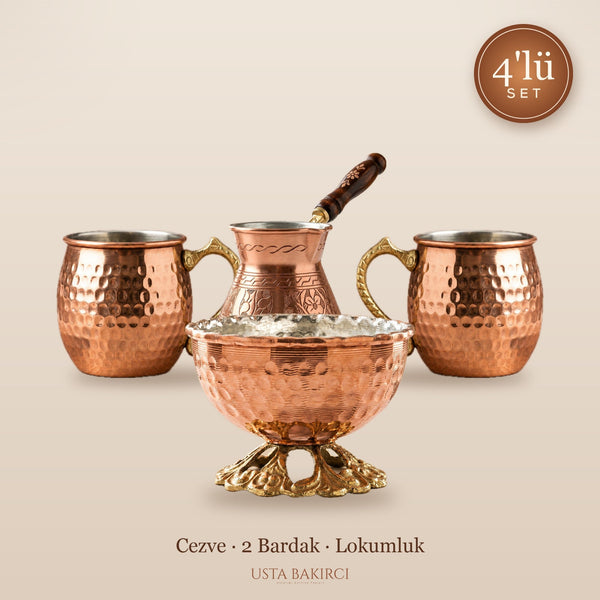
Milk quickly absorbs heat due to the fat and proteins in its structure. When a copper cezve lined with tin is selected, the raw surface of the copper does not come into direct contact with the milk. This both ensures that the coffee with milk cooks with its traditional consistency and eliminates the risk of contact with the metal. In products with a tin coating suitable for food contact, such as the Cezve Hand-Hammered Engraved Tinned Pure Copper 2-Cup model we produce in our workshop, you can safely prepare Turkish coffee with milk or different milk coffee recipes.
Is an unlined copper cezve used when making coffee with milk?
Making coffee with milk in unlined copper cezves or those where the tin has completely peeled off, revealing the red copper layer underneath, is definitely not recommended. Unlined copper surfaces can only be considered suitable for boiling water; complex foods containing proteins and fats like milk should not come into contact with raw copper under heat.
The organic components and moisture in milk can cause oxidation on the raw copper surface over time. This both leaves a metallic and bitter taste in the coffee and risks the safety of use. If the tin layer inside your cezve has peeled off in places and the distinct red copper color has become visible to the eye, you must have it re-tinned before using it for milk-based cooking. You can compare the condition of your kitchenware with the well-maintained product standards in our Copper Kitchen collection.

How is coffee with milk made step by step in a copper cezve?
When making Turkish coffee with milk in a copper cezve, low heat and the correct order should be applied to prevent the milk from quickly overflowing and burning on the bottom. For the most ideal taste and consistency, you can follow these steps:
- Measuring Setup: Pour 1 cup of cold or room-temperature milk into the cezve per person. Add 1 to 1.5 teaspoons of freshly ground Turkish coffee on top for each cup. Add sugar at this stage according to preference.
- Cold Mixing: Before taking the cezve to the stove, ensure the coffee and milk are completely integrated using a wooden or silicone spoon. Not using a metal spoon protects the lifespan of the tin coating.
- Cooking on Low Heat: Leave the cezve to cook on the smallest burner of the stove and on the lowest heat. Since copper spreads heat quickly, high heat causes the milk to suddenly boil and the coffee to overflow without properly brewing.
- Distributing Foam: Distribute the first layer of foam that rises on the surface of the heated milk into the cups with a spoon.
- Final Pour and Serving: The moment the coffee with milk rises one more time in the cezve, take it off the stove and slowly pour it into the cups from the side. Your coffee with milk is ready to serve.
How should the copper cezve be cleaned after coffee with milk?
Immediately after making coffee with milk, the copper cezve should be washed with lukewarm water and a soft sponge without allowing it to cool. When the proteins in the milk dry, they stick to the tin surface in a hard layer and make cleaning difficult.
The basic rules to follow during cleaning are as follows:
- Dishwashers Should Not Be Used: Copper products should definitely not be washed in the dishwasher. High heat and aggressive detergents cause both the darkening of the copper on the outside and the rapid wear of the tin on the inside.
- Chemicals Should Be Avoided: Bleach, muriatic acid, or abrasive descalers damage the tin coating. Only liquid dish soap and lukewarm water are sufficient.
- Hard Brushes Should Not Be Preferred: Wire sponges or sharp objects like knives should not be used to scrape off the milk residue stuck to the bottom. Instead, lukewarm water should be poured into the cezve and left for 15-20 minutes, then wiped with a soft sponge.
- Drying Is Important: Immediately after washing, the outside and inside of the cezve should be dried with a cotton cloth. Water stains can form on the wet copper surface.
How does coffee with milk compare to water in terms of cooking and maintenance needs?
The coffee brewing processes with water and milk differ in terms of the wear rate of the vessel used and cleaning requirements. The table below shows the maintenance criteria side by side:
| Criterion | Coffee Brewing with Water | Coffee Brewing with Milk | Cooking in an Unlined Cezve |
|---|---|---|---|
| Ease of Cleaning | Very High (Rinsing may be sufficient) | Medium (Requires immediate washing before drying) | Difficult (Risk of irregular oxidation) |
| Food Safety | Completely safe if tin-lined | Completely safe if tin-lined | Not Suitable |
| Tin Wear Rate | Low | Medium (Intense fat/protein contact) | No Coating |
| Ideal Heat Setting | Low - Medium Heat | Only the Lowest Heat | Not Recommended |
Which size copper cezve should be preferred for coffee with milk?
Since milk rises and foams more than water-based coffee as it cooks, a cezve one size larger than the target number of cups should be selected for making coffee with milk. For example, if you want to cook coffee with milk for 2 people, using a 4-cup cezve to reduce the risk of milk overflowing to zero offers a much more comfortable brewing experience.
Wide-capacity cezves allow the milk foam to rise easily. Deep models designed for large families or entertaining guests, such as the Cezve Black Bulbous Hand-Hammered Pure Copper 6-Cup, provide an ideal space for making coffee with milk. Also, if you want to gift your loved ones a traditional serving experience, you can consider complete options such as the Coffee Pleasure Gift Set.
To examine our handmade copper cezve varieties, which are indispensable to our traditional kitchen culture, and to discover the original designs coming from the master's hand, you can take a look at our Cezves category.
The Master's Note
We recommend keeping the heat at the lowest level when brewing coffee with milk in the cezves we prepare with hand-hammered craftsmanship in our workshop in Gaziantep. Thanks to copper's ability to spread heat evenly from the bottom to the sides, the milk does not burn on the bottom and the aroma of the coffee passes softly into the milk.
Products Mentioned in the Article


Frequently Asked Questions
Is coffee with milk left in a copper cezve stored in the refrigerator?
No food or drink, including coffee with milk cooked in copper vessels, should be stored in a copper vessel. After cooking is finished, the coffee should be served immediately or transferred to a glass container if it is to be stored.
Does coffee with milk darken the tin of the copper cezve?
Milk alone does not darken the tin. However, if it burns on the bottom after the coffee is cooked or is left without being washed for a long time, stains may form on the inner surface.
Is only milk boiled in a copper cezve?
Only milk can be boiled in a tin-lined copper cezve. However, to prevent the milk from burning on the bottom, the heat should be kept low and the cezve should be washed immediately after the process is finished.
How do we know the tin of the cezve needs to be renewed?
If the tin layer on the inner surface of the cezve has worn away and the pink-red copper color underneath has become clearly visible, it means it is time for the cezve to be re-tinned.
Discover: Cezves
Best Sellers


