


How to Identify Food-Safe Copper Cezves?

In short: A food-safe copper cezve is identifiable by its smooth, complete tin lining on the interior, and its body crafted from heavy, thick pure copper. The absence of exposed areas inside the cezve where copper metal would come into direct contact with food, and the avoidance of harmful soldering materials at joints, are key safety indicators.
- The interior of a food-safe copper cezve must have a complete, food-grade tin coating.
- Copper cezves with thick walls and balanced bases distribute heat evenly, ensuring safe use.
- Dishwashers and corrosive substances such as bleach should never be used for cleaning.
A food-safe copper cezve is a copper vessel that is completely tinned so that no bare metal is exposed on the interior, maintains sufficient wall thickness, and is manufactured using assembly techniques suitable for food contact. To ensure safe use in the kitchen, the quality of the interior coating, the weight of the body, and the handle attachment details should be carefully examined. A properly crafted copper cezve allows Turkish coffee to brew slowly with ideal heat distribution without compromising food safety.
How can you tell if a copper cezve is food-safe?
The first and most important way to determine if a copper cezve is food-safe is to visually inspect the continuity and quality of the tin coating on the product's interior. As with all copper cookware used for hot cooking in traditional culinary culture, the interior of cezves must also be coated with pure tin. There should be no areas on the interior where the reddish color of the copper is directly visible, and the coating should form a uniform, silvery layer.
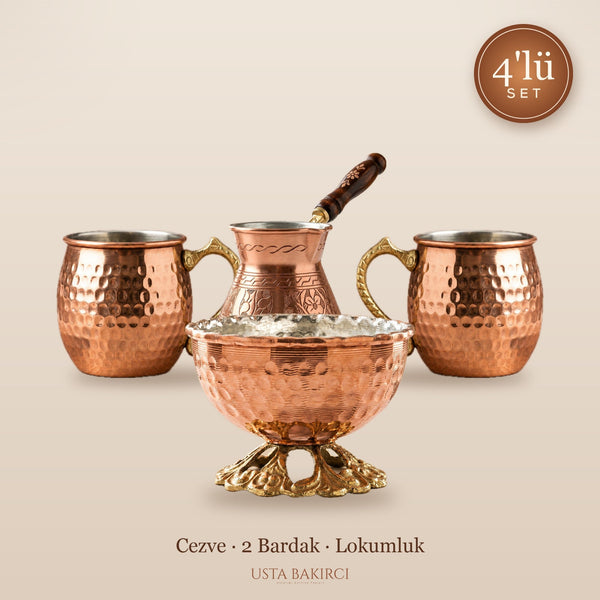
The products in our Cezves collection, crafted in Gaziantep workshops, are made using the hot-tinning technique. After the copper is heated, pure tin is applied to the interior and spread with cotton. The resulting slightly rippled appearance on the interior surface is natural evidence of handcraftsmanship. However, this rippled texture does not necessarily mean the coating is thin or incomplete; what matters is that the copper metal is prevented from coming into direct contact with the coffee.
Another factor determining the food safety of the product is the material used for the handle attachment and riveting. Brass or copper rivets should be used instead of lead-containing solders in areas that come into contact with food or are exposed to heat. For example, in our Cezve El Dövmesi İşlemeli Kalaylı Saf Bakır 2 Kişilik model, the handle is securely fastened to the body with durable rivets, creating a long-lasting and hygienic design.
How can you check the quality of the tin used for the interior coating?
The quality of the tin coating can be determined by the shine and integrity of the surface, and by the absence of peeling. In a high-quality hot-tinning process, the tin bonds with the copper surface at a molecular level and does not bubble or flake on its own. When you check the interior of a newly purchased cezve with your finger, you should not feel any gray dust or metallic residue.
The following practical inspection method can be used step by step to check the tin coating:
- Visual Inspection Under Light: Hold the cezve up to a strong light source and inspect the interior base and the curves of the rim. The coating should not have any red (copper-colored) or dark spots indicating exposed areas.
- Surface Texture Check: Run your finger over the interior surface of the cezve. The tin coating should be smooth and continuous, without sharp burrs or pointed protrusions.
- Condition After Washing: If no discoloration or peeling occurs on the tin surface after the first wash, the coating is of good quality.
Over time, the tin layer may wear down due to use. Cezves that become dull inside or show copper in places must be re-tinned using traditional methods to maintain food safety. For larger products designed for large families or those who enjoy entertaining guests, such as the Cezve Siyah Tombul El Dövmesi Saf Bakır 6 Kişilik, regular tin inspections are also necessary due to the large interior surface area.

How can you distinguish a hand-hammered copper cezve from a machine-made one?
A hand-hammered copper cezve is distinguished from factory-made, machine-drawn products by its irregular hammer marks, substantial wall thickness, and weight. Copper shaped and hammered by hand becomes denser, allowing it to retain heat for longer and enabling the coffee to brew slowly with a rich foam.
Machine-made pressed cezves are generally made from thin copper sheets, and the hammer patterns on their surfaces are stamped superficially by machines. These patterns are perfectly symmetrical and lack depth. In a product crafted by a master, the depth and angle of each hammer strike differ slightly, giving the piece a unique character.
The following table compares the main differences between food-safe hand-hammered copper cezves and standard decorative or thin pressed cezves:
What are the thickness and weight standards for food-safe copper cezves?
The ideal wall thickness of a food-safe copper cezve generally ranges from 1.5 mm to 2 mm. Cezves made from thin material transfer heat uncontrollably to the coffee when exposed to fire, which can cause the coffee to become bitter and the tin to deform more quickly.
Thick copper absorbs heat from the stove and distributes it evenly across the side walls. This allows Turkish coffee to brew without burning, reaching an ideal level of foam. You can explore our Copper Kitchen category to examine traditional kitchenware and discover different cooking vessels. A thick-walled cezve should feel noticeably heavy. Vessels that remain balanced and do not tip over even when empty provide a safe working environment in the kitchen.
Combining aesthetic design with a thick construction, our Cezve Kırmızı Dövme Saf El İşlemesi Bakır 2 Kişilik model provides a safe brewing experience for both everyday use and special occasions, thanks to its balanced base and ideal wall thickness.
What are the safety rules for using and caring for copper cezves?
Safety when using a copper cezve is ensured by choosing the correct cleaning products and not leaving food in the vessel for extended periods. Because copper conducts heat very quickly, cooking should always be done over low or medium heat. Leaving an empty cezve directly over high heat can cause the tin inside to melt or become damaged.
The following basic care rules should be followed to preserve the lifespan of copper vessels and use them safely:
- Do Not Use a Dishwasher: Dishwasher detergents contain highly alkaline and harsh chemicals. These substances darken the exterior of the copper and wear away the tin coating inside, making it unusable. Washing should always be done by hand with a soft sponge and liquid dish soap.
- No Bleach or Steel Wool Sponges: Bleach, muriatic acid, and steel wool sponges should never be used for cleaning, as they will scratch the tin coating or cause a chemical reaction.
- Do Not Leave Acidic Foods in the Vessel: Copper vessels are generally not suitable for prolonged contact with acidic foods (lemon, vinegar, tomatoes). The cezve should be emptied and washed immediately after brewing coffee.
- Do Not Neglect Drying: Drying the vessel with a soft cloth immediately after washing delays the formation of water spots and natural oxidation on the copper.
You can explore our special product groups designed for those who wish to give their loved ones a traditional and lasting gift via the Home Gift Sets link.
Can a copper cezve with worn tin coating continue to be used?
Cezves with worn tin coatings that clearly reveal the red copper surface underneath should not be used for cooking without being re-tinned, due to the risk of cross-contamination and food safety issues. When copper comes into contact with acidic and moist environments, it can oxidize and transfer to food. However, as long as the interior surface is completely tinned, copper cezves remain among the healthiest and most flavorful cooking vessels in the world.
When slight, localized color changes begin to appear on the interior base of your cezve, it is a sign that it is time for maintenance. If the coating has worn away over large areas and the copper is exposed, the cezve should be removed from the stove and taken to traditional tinning masters. A properly tinned and carefully used copper cezve is a valuable culinary heritage that can be passed down from generation to generation.
You can safely explore the product collections on our website to examine our pure copper cezves and kitchenware, shaped with traditional craftsmanship in our workshop, and add value to your coffee experience with high-quality vessels that meet food safety standards.
The Master's Note
As with every product we shape in our workshop, we place food safety first in the cezves that are at the heart of coffee culture. The hot-tinning technique applied by our masters using traditional cotton beating methods preserves the heat conductivity of the copper while offering a pure flavor to your coffee. You can safely use vessels that have begun to show the color of copper on their interior surface for many years by having them re-tinned.
Products Mentioned in the Article


Frequently Asked Questions
Why is the interior of a copper cezve tinned?
The interior is coated with pure tin to prevent the copper metal from oxidizing when it comes into direct contact with food and to ensure food safety during cooking.
Can a copper cezve be washed in the dishwasher?
No, copper cezves should not be washed in the dishwasher. Dishwasher detergents and high heat wear away the tin coating and darken the exterior of the copper.
How should a newly purchased copper cezve be cleaned before use?
A newly purchased copper cezve can be washed with warm water, a soft sponge, and liquid dish soap, then dried, making it ready for immediate use.
How long does the tin in a copper cezve last?
Depending on the frequency of use and adherence to care rules, the tin coating retains its smooth texture for several years; it should be re-tinned when the copper inside becomes visible.
Is it normal for the tin inside the cezve to darken?
Yes, tin may become dull or slightly darker over time as it comes into contact with heat. As long as the copper surface is not exposed, this does not prevent it from being used for food.
Discover: Cezves
Best Sellers


