



How to Identify Real Copper?

In brief: To understand genuine copper products, first pay attention to their weight; pure copper is heavier than you might expect. Hand-crafted marks on the surface, deep and natural reddish tones, the fact that a magnet will not stick to it, and a smooth tin lining on the interior are the most important signs indicating the purity and quality of the product.
- Genuine copper is heavier than its imitations and features hand-crafted marks on its surface.
- The color of copper should be in natural reddish tones, it should not be magnetic, and the interior surface should be properly tin-lined.
- Proper care and cleaning methods are vital for the long-lasting and healthy use of copper products.
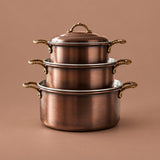
Copper products, which hold an important place in our traditional kitchens and home decor, attract attention with both their aesthetic appearance and functionality. However, the presence of copper products of many different qualities and purities on the market can make it difficult to distinguish real copper from fake. As Usta Bakırcı, with the experience we have gained from the handmade flasks, coffee pots, pots, and many other products we have produced by crafting pure copper in our workshop in Gaziantep for years, we would like to share with you the intricacies of identifying genuine copper. The most fundamental ways to tell if a product is real copper are to pay attention to its weight, color, texture, craftsmanship, and especially its tin lining.
What Should the Weight and Perceived Quality of Genuine Copper Be Like?
Genuine copper gives a heavier and more solid feel than you might expect. This is one of the most important indicators that the product is produced from pure copper and is of sufficient thickness.
When buying a copper product, pick it up and weigh it in your hand. If the product is light and thin-walled, it probably has a low percentage of pure copper or is made of another metal covered with a very thin layer of copper. In products such as our pots and pans produced in our workshop in Gaziantep, the thickness and density of the copper are critical for distributing heat evenly and preserving the flavor of the food. Thick copper is both more durable and a better heat conductor. For example, copper products with a thickness of 2 mm and above are ideal for long-term use. Copper products that feel light, grainy, or like "cardboard" should be avoided.
How Do the Color and Texture of Copper Give Away Pure Copper?
Pure copper has a unique, warm, and natural reddish-brown tone. The hand-crafting marks on its surface and the patina that forms over time also show the authenticity of the product.
Here is what you should pay attention to in order to understand the color and texture of genuine copper:
- Natural Color Tone: The color of genuine copper is in deeper, matte, and slightly reddish-brown tones rather than a bright and artificial red. Even newly produced pure copper has a natural color, even if it shines slightly under light. Products can sometimes be found on the market that look like copper but are actually made of another metal and just painted the color of copper. The color of these products usually looks too bright, uniform, and artificial.
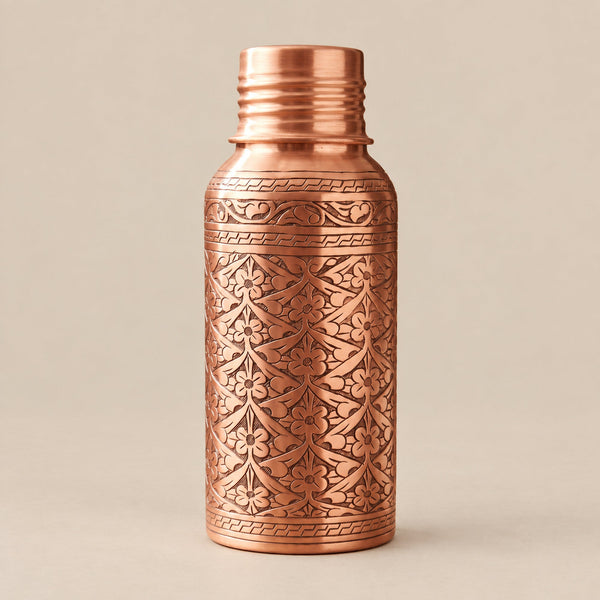
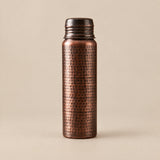
- Hand-Crafting Marks: Each product in our workshop comes to life with forging and shaping processes carried out by the hands of our masters. This leaves slight hammer marks, small ripples, and asymmetrical patterns on the product surface, which you can see in products like our Round Handmade Pure Copper Flask 750 ml. Machine-produced copper products, on the other hand, usually have a flawlessly smooth and uniform surface. These marks are proof that the product is made with manual labor, i.e., using traditional methods, and they add character to the product.
- Patina Formation: Pure copper naturally darkens when it comes into contact with air over time and forms a greenish layer (patina). This is a natural feature of copper and indicates the authenticity of the product. If a copper product never changes color or darkens over time, it likely has a protective lacquer coating on it, or it is not pure copper. Lacquered products are usually for decorative purposes and are not suitable for cooking or serving drinks.
- Magnet Test: Pure copper is non-magnetic. Therefore, when you bring a magnet close to the surface of the copper product, the magnet should not stick to it. If the magnet sticks to the product, this indicates that the product contains magnetic metals such as iron or steel, indicating it is not pure copper.

Why Is Tin Lining Vitally Important in Copper Products?
The tin lining on the interior surface of copper kitchen products is a critical detail in terms of both health and service life. Tin ensures food safety by preventing copper from coming into direct contact with acidic foods.
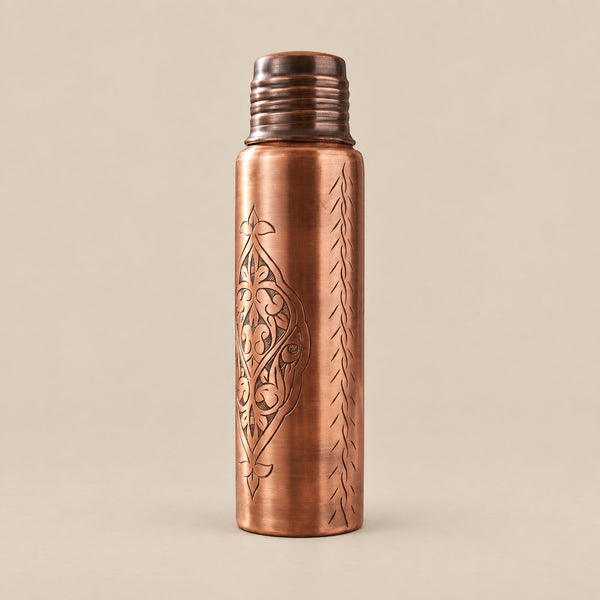
The interior surfaces of copper products used for cooking or storing liquids must be lined with tin. Tin prevents copper from reacting with acidic foods and drinks (lemon, vinegar, tomatoes, etc.) to form toxic compounds. For this reason, keeping or cooking acidic foods in unlined copper containers for a long time can be risky for health. Some of our beverage products, such as the Handmade Pure Copper Black Special Engraved Carafe 1.5 L, may also be tin-lined, but our drinking vessels like flasks are generally unlined because they are designed for neutral liquids like water. We take great care in the quality of the tin lining in all our products that come into contact with food.
To understand the quality of the tin lining:
- Homogeneous Surface: The tin lining should be spread completely and homogeneously over the interior surface of the product. There should be no visible gaps, stains, or peeling.
- Brightness and Smoothness: The interior surface of a newly tinned copper product should be bright, silvery in color, and smooth. Over time, this brightness may decrease, but the integrity of the surface must be maintained.
- Thickness: It is important that the tin layer is of sufficient thickness. A very thin tin layer can wear out in a short time and cause the copper to be exposed.
Best Sellers


