



Which Copper Pot Should I Buy for Home Use?

In brief: When choosing a copper pot for home use, you should primarily ensure that the product is handmade from pure copper, its inner surface is lined with high-quality tin suitable for food contact, and it is of a size appropriate for the type of dish you are cooking. A thick-bottomed, well-crafted copper pot will accompany you in the kitchen for many years.
- When selecting a copper pot, your top priorities should be pure copper material, sturdy tin lining, and hand craftsmanship.
- The correct pot size should be determined based on the quantity of food you prepare and your family size; products of different sizes can be preferred for versatile use.
- You can extend the lifespan of your copper pots and maintain their original shine by washing them by hand and avoiding leaving acidic foods in them for long periods.
What Should You Consider When Choosing a Copper Pot for Home Use?
The first and most important point to consider when choosing a copper pot for home use is the product's quality and its tin lining. A copper pot that you can safely use in your kitchen for many years will not only enhance the flavor of your meals but also add a warm atmosphere to your kitchen with its aesthetic appearance. Every pot we produce by hand from pure copper in our workshop in Gaziantep is carefully prepared to meet these expectations.
Key criteria you should consider when buying a copper pot are as follows:
- Material Quality: A genuine copper pot must be made of pure copper. There may be products on the market that look like copper but are a mixture of different metals. Pure copper is one of the best heat conductors and ensures that your food cooks evenly throughout. The copper used in our workshop is of high purity, offering the highest level of durability and performance.
- Tin Lining: The inner surfaces of copper pots must absolutely be lined with tin. Tin provides a healthy usage experience by preventing the copper from reacting with acidic foods (such as tomatoes, lemon, or vinegar). Ensure that the tin lining is even, smooth, and of sufficient thickness. Tin linings applied using traditional methods and hand craftsmanship are long-lasting and reliable.
- Thickness of the Copper: The copper thickness of the pot directly affects its capacity to retain and distribute heat. Thick copper pots retain heat better and prevent food from sticking to the bottom. Furthermore, they are more resistant to impacts and less likely to deform. For average home use, choosing a copper pot with a thickness of at least 1-1.5 mm is ideal.
- Handcrafting and Hammering Technique: Handmade and hammered copper pots are superior not only in aesthetics but also in durability. The hammering process tightens the molecular structure of the copper, making it sturdier. Every hammer mark reflects the effort and experience of the master craftsman. For example, products such as the Rice Pot Red Hammered Pure Copper Handmade 20-25 cm, which are ideal for cooking traditional dishes on your table, are examples of this meticulous craftsmanship.
- Handles and Lids: It is important that the handles of the pot are sturdy and made of heat-resistant material. Brass or wooden handles are both an aesthetic and functional choice. Lids that fit the pot perfectly help the food cook better by preventing steam from escaping.
How to Choose the Right Copper Pot Size?
When choosing the size of a copper pot, you should first consider how many people you will be preparing meals for and what kind of dishes you will be cooking. Choosing the right size is critical for your food to cook ideally and for using your pot efficiently.
Here are some tips to guide you on size when buying a copper pot:
- For Individuals or Small Families: If you generally prepare meals for one or two people, small 1-2 liter pots or "sahan" (shallow pans) will be sufficient for you. They are ideal for breakfast items or small portions.
- For Medium-Sized Families: If you are a family of 3-4, medium-sized copper pots of 3-5 liters will meet most of your cooking needs. These sizes are quite useful for rice, vegetable dishes, or soups. For example, a product like the Heavy-Embossed Red Handmade Pure Copper Pot 5 L can be suitable for both daily use and hosting guests due to its large capacity.
- For Large Gatherings and Special Meals: If you frequently host guests or like to cook large portions, you may consider large pots over 5 liters. These pots are indispensable for stews, meat dishes, or large quantities of rice.
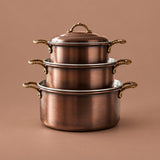
- For Versatile Use, Sets: If you need pots in different sizes, copper pot sets are a great option. These sets typically combine pots of different capacities to provide a complete solution in the kitchen. For example, products like the Heavy-Embossed Black Handmade Pure Copper Pot Set 3 Sizes come with the variety to respond to every need in the kitchen. For smaller kitchens or those wanting to save space, the Black Handmade Tinned Pure Copper Pot 3 Sizes can also be a great alternative.
To find the copper pot or pot set most suitable for your needs, you can browse our Pots and Pans collection and discover different sizes and models. Additionally, Copper Sets, which offer compatible and practical solutions for your kitchen, are among the options you can evaluate.

What is the Importance of Tin Lining in Copper Pots and Tips for Safe Use?
The tin lining on the inner surface of copper pots is not just an aesthetic detail but also the foundation of healthy and safe usage. This lining is one of the most critical elements that allows copper to maintain its traditional place in our kitchens.
So, why is tin lining so important, and what should you pay attention to in order to use your copper pots safely?
- Reactive Nature of Copper: Copper is a metal that can react when it comes into contact with certain acids. Especially acidic foods such as tomatoes, lemon, and vinegar, or fermented products like yogurt, can cause copper to leach into the food if in contact for a long time with an untinned or worn-tinned copper surface. This can spoil the taste of the food and, when ingested in high quantities, may lead to health problems.
- Tin's Protective Shield: This is where tin lining comes into play. Unlike copper, tin is an inert metal that does not react with acidic foods. Lining the inner surface with tin creates a safe barrier between the copper and the food. Thus, you can cook all kinds of meals in your copper pots with peace of mind. Our craftsmen in Gaziantep apply this traditional tinning technique with great care, ensuring our products are both healthy and long-lasting.
- Condition of the Tin Lining: Over time and depending on use, the tin lining inside copper pots may wear out, get scratched, or tarnish. If the copper color begins to show on the inner surface of your pot or if there is visible peeling in the tin, you need to have your pot re-tinned. This extends the product's lifespan and guarantees healthy usage. Re-tinning must be performed by professional coppersmiths.
-
Tips for Safe Use:
- Always prefer tinned copper pots.
- Do not cook acidic foods or let them sit for a long time in pots where the tin lining is worn or scratched.
- To protect the tin lining, use wooden or silicone spatulas instead of metal kitchen utensils.
- Empty and clean the pot immediately after cooking. Do not leave acidic foods in the pot.
A correctly tinned copper pot allows you to cook delicious meals in your kitchen while enjoying a traditional heritage.
How to Maintain and Clean Copper Pots?
To use your copper pots in your kitchen for many years as if they were brand new, it is essential to follow the right maintenance and cleaning steps. With proper care, copper can be a legacy that is passed down for generations.
Steps you should follow for the maintenance and cleaning of your copper pots:
- Requirement of Hand Washing: Copper pots should never be washed in a dishwasher. The high heat and harsh detergents of a dishwasher will both dull the outer copper surface and damage the inner tin lining. Wash your pot by hand after every use using warm water, dish soap, and a soft sponge.
- Avoid Abrasive Materials: When cleaning copper pots, avoid using bleach, hard brushes, steel wool, or abrasive cleaners. Such substances will scratch the shiny surface of the copper and damage the tin lining.
- Natural Polishing Methods: Copper pots can oxidize and tarnish over time. This is a natural process. Instead of chemical polishes, you can prefer natural methods to polish the outer surface of your pot. One of the methods frequently used by our craftsmen in Gaziantep is to sprinkle salt or baking soda onto half a lemon and gently scrub the copper surface. Then, rinse with warm water and dry thoroughly. This method restores the copper's natural shine.
- Thorough Drying is Important: After washing, be sure to dry your copper pots thoroughly with a dry cloth. Water spots or oxidation can form more quickly on copper surfaces left damp.
- Maintenance of the Inner Tin Lining: To protect the tin lining inside the pot, pay attention to using wooden or silicone kitchen utensils instead of metal spoons or ladles. Scratching or wearing down the tin lining shortens the life of your pot and creates a need for re-tinning.
By following these simple maintenance steps, you can preserve the beauty and functionality of your copper pots for many years. Remember, a well-cared-for copper pot will continue to be the star of your kitchen.
Do Gaziantep Handicraft Copper Pots Make a Difference in the Kitchen?
Gaziantep is an ancient city where the craft of coppersmithing has been kept alive for centuries and each copper product is crafted with the meticulousness of a work of art. As Usta Bakırcı, we continue this deep-rooted tradition, offering your kitchens not just a cooking tool, but also a cultural heritage. So, do Gaziantep handicraft copper pots really make a difference in the kitchen?
Absolutely, yes! Here are the differences that Gaziantep copper pots will make in your kitchen:
- Unique Heat Conduction and Homogeneous Cooking: Copper conducts heat much faster and more homogeneously than other metals like steel or aluminum. Thick-bottomed copper pots made by the hands of Gaziantep craftsmen ensure that your food is heated and cooked evenly throughout. This makes your food more delicious, prevents it from sticking to the bottom, and better preserves its nutritional value. A copper pot is indispensable, especially for traditional dishes cooked for a long time over low heat.
- Durability and Longevity: Hand-hammered copper is much more durable than copper produced by industrial methods. The hammering process strengthens the structure of the copper, giving the pot extra resistance. Our pots, carefully hammered and tinned in our workshop, are sturdy enough to be used for generations with proper care. This means you will get more than your money's worth from the investment you make in the kitchen.
- Aesthetic and Traditional Touch: Copper pots add a warm, authentic, and elegant atmosphere to your kitchen. The hand-crafted motifs and hammer marks on each pot give it a unique character. While cooking your meals or presenting them, these pots stop being just kitchenware and become one of the most striking pieces of your kitchen and table. For our readers interested in traditional and handmade products, the products in our Home Gift Sets or Bestsellers categories offer great options for those who want to add this special touch to their kitchens.
- Assurance from Master Hands: Coppersmiths in Gaziantep protect this craft like a legacy passed down from father to son. Each pot is shaped by the experience, knowledge, and artistic ability of the masters. As Usta Bakırcı, behind every one of our products lies the assurance of this deep-rooted tradition and high quality. This means you are purchasing not just a product, but also a culture and art.
Gaziantep handicraft copper pots truly make a difference by adding not just an item to your kitchen, but also a story, a flavor, and an aesthetic value.
Choosing the right copper pot for home use will make the time you spend in the kitchen more enjoyable and efficient. As Usta Bakırcı, we are proud to serve you with our handmade, pure copper pots and pans that carry the ancient coppersmithing tradition of Gaziantep into modern kitchens. Whether you are looking for a special gift for yourself or your loved ones, you can easily find the one most suitable for your needs among the pots and pans and copper sets in our wide product range. Explore our collections right now to add a traditional touch to your kitchens and cook delicious meals!
Master's Note
In our workshop, every single copper pot reaches your table after passing through the hands of our masters. The care we show in the stages of hammering and tinning the copper ensures that our products are both durable and aesthetic. Remember, a good copper pot remains like it was on the first day for years with proper care and becomes a legacy that can be passed down from generation to generation.
Products Mentioned in the Article


Frequently Asked Questions
Why is the tin lining inside a copper pot important?
Tin lining provides healthy usage by cutting off direct contact between copper and acidic foods. While copper can react with acidic foods, tin creates a safe barrier with its inert structure.
Can a copper pot be washed in the dishwasher?
No, copper pots should definitely not be washed in the dishwasher. The high heat and harsh detergents of the dishwasher will damage both the exterior surface of the copper and the interior tin lining, shortening the product's lifespan.
Why is the thickness of the copper important when buying a copper pot?
The thickness of the copper directly affects the pot's ability to retain and distribute heat. Thick copper pots distribute heat more evenly, ensuring food cooks uniformly and making them more durable.
How can I polish my copper pot if it tarnishes?
If the exterior surface of your copper pot tarnishes due to oxidation, you can restore its natural shine by sprinkling salt or baking soda onto half a lemon, rubbing it gently, then rinsing with warm water and drying.
What types of food should be cooked in copper pots?
Because copper pots conduct heat excellently, they are ideal for many types of dishes such as rice, stews, meat dishes, soups, and sauces. However, you should be careful not to leave acidic foods for a long time in pots with worn-out tin linings.
Discover: Pots and Pans
Best Sellers


