



Why Are Copper Pots Tinned?

In brief: Copper pots offer a healthy and safe cooking experience thanks to their inner surfaces being coated with tin, which comes into direct contact with food. Tin prevents copper from reacting chemically with acidic foods, thereby preserving their natural flavor and eliminating any potential harmful effects of copper.
- Copper pots must have their inner surfaces coated with tin for healthy and safe use.
- The tinning process eliminates the risk of poisoning by preventing copper from coming into contact with acidic foods and preserves the taste of the food.
- If the tin coating wears out, re-tinning the copper pot not only extends the life of the product but also ensures safety in the kitchen.
Copper pots provide both a healthy and safe cooking experience thanks to their inner surfaces—which come into direct contact with food—being coated with tin. Tin prevents copper from reacting with acidic foods, thereby preserving the food’s natural taste and extending the pot's service life. This traditional method allows us to safely utilize the unique heat conductivity of copper in our kitchens.
Why Are Copper Pots Tinned?
The primary reason for tinning a copper pot is to prevent direct contact between the copper and acidic food or beverages. When copper stays in contact with acidic foods—such as lemon, vinegar, or tomatoes—for an extended period, it can oxidize, which may lead to copper ions leaching into the food. This traditional method creates a safe environment for kitchen use by blocking the direct interaction between food and copper.
This process, which we have been practicing in our workshop in Gaziantep for centuries, is vital not only for health but also for maintaining the beauty and durability of the copper. While tin preserves copper's high heat conductivity, it also prevents the food from changing color or flavor. This way, you can enjoy cooking both healthy and delicious meals.
The Tinning Process: A Step-by-Step Guide from Gaziantep Masters
Tinning copper pots is a traditional craft that requires expertise and experience. At our workshop in Gaziantep, we meticulously follow these steps when tinning the inner surfaces of our handmade pure copper pots:
- Cleaning the Copper: First, the copper pot to be tinned is cleared of any accumulated dirt, grease, and old tin residue. Special acid baths and sanding techniques are used for this process. Ensuring the surface is completely smooth and clean is critical for the tin to adhere properly to the copper.
- Surface Preparation: The cleaned copper surface is coated with special substances like borax and sal ammoniac to help the tin bond better. These agents ensure that the tin spreads homogeneously across the copper surface.
- Heating: The copper pot is heated in special ovens or on burners to approximately 250-300°C. This temperature is ideal for the tin to melt and fuse with the copper.
- Applying the Tin: The melted pure tin is quickly and evenly applied to the inner surface of the heated copper pot using a cloth or cotton pad. The master works by rotating the pot and spreading the tin to ensure it covers every point. Making fast and accurate movements at this stage is essential for achieving a smooth tin layer.
- Cooling and Cleaning: Once the tinning process is complete, the pot is left to cool. After cooling, excess tin residue is cleaned off, giving the pot a shiny finish.
These steps ensure that every copper pot and pan can be safely used in your kitchen. Our masters in the workshop perform this craft with great care, guaranteeing the quality of each product.

Things to Consider When Using Tinned Copper Pots
To extend the life of your tinned copper pots and maintain their safe use, you need to pay attention to several important points. Here are some practical tips from the Master Coppersmith:
- Acidic Foods: As long as the tin layer is intact, you can safely cook acidic foods. However, if you notice any scratches or wear on the tin layer, you should postpone cooking acidic foods and have your pot re-tinned. Avoid leaving highly acidic foods like lemon, vinegar, or tomato in untinned copper for long periods.
- Cleaning: Never use a dishwasher to clean your copper pots. The high temperatures and aggressive detergents of dishwashers can damage the tin layer. Wash them by hand using warm water and a soft sponge. Stay away from bleach or cleaners containing harsh chemicals.
- Protection Against Scratches: During cooking, use wooden or silicone kitchen utensils instead of metal spoons or spatulas. Scratching the tin layer may expose the underlying copper.
- Storage: When stacking your pots, you can place a cloth or paper towel between them to prevent the tin layer from being scratched.
Remember, with proper care, a tinned copper pot set will continue to be an indispensable part of your kitchen.
When Should You Renew the Tin on Your Copper Pot?
The tin layer on the inside of your copper pot can wear down or become scratched over time. This is the most significant sign that the tin needs to be renewed. So, how do you know when it’s time to re-tin?
- Color Change: The tin layer has a bright, silvery color. If you start to see patches of red copper color inside your pot, it indicates that the tin has worn away and the copper is exposed.
- Dulling and Tarnishing: The loss of shine on the tinned surface or the surface turning dark is also a sign that the tin is wearing out.
- Surface Scratches: Deep scratches or peeling indicate that the tin has lost its functionality and needs to be re-tinned. In these areas, the contact between the copper and the food increases.
- Frequency: The interval for re-tinning depends on usage frequency. The tin of a heavily used pot should be checked once a year and renewed if necessary. For pots used less frequently, this period can be every 2-3 years.
Our masters in Gaziantep are happy to assist you with re-tinning as well. The old tin layer is completely removed, and your pot is restored to its original safe and shiny state. It is especially important to pay attention to this maintenance for frequently used products like the Silver-Colored Handmade Tinned Pure Copper Cooking Pot 3 Liters, as it extends the product's lifespan.
Is It Safe to Cook in Untinned Copper?
Cooking in untinned copper containers is not recommended, especially when dealing with acidic foods. While copper is an important element for some minerals and vitamins, it can lead to health issues when ingested in high amounts. The tin layer acts as a barrier that eliminates this potential risk.
The table below summarizes the main differences between tinned and untinned copper pots and their usage areas:
| Feature | Tinned Copper Pot | Untinned Copper Pot |
|---|---|---|
| Usage Area | Cooking, storage, presentation | Water boiling only, jam making (short-term), decoration, presentation |
| Food Contact | Safe; prevents direct contact between copper and food | Risks copper oxidation when in contact with acidic foods |
| Maintenance | Important to protect the tin layer; watch out for scratches | Regular cleaning required to maintain the copper's natural shine |
| Safety | Offers safe cooking by preventing reactions between food and copper | Can pose a health risk with prolonged contact with acidic foods |
| Lifespan | Long-lasting and healthy use with regular tin maintenance | Not suitable for food contact outside of specific usage areas |
For this reason, you should definitely choose tinned copper pots for active cooking in the kitchen. If you have an untinned copper item, we recommend using it only for limited purposes such as decoration or boiling water. For example, a copper pot is used for a short time when making jam, and the prolonged contact of acidic fruit with copper is prevented; this is a traditional way of usage.
Care Tips for Tinned Copper Pots from the Master Coppersmith
Regular maintenance is crucial to ensure your copper pots stay like new and accompany you in your kitchen for many years. Here are golden tips for tinned copper pot maintenance from our masters in Gaziantep:
- Clean Immediately: After cooking, empty your pot and wait for it to cool down. Cleaning food residues before they dry prevents staining.
- Use Soft Materials: Always use a soft sponge or cloth when cleaning the inside of your pot. Abrasive scourers or hard brushes can damage the tin layer.
- Natural Cleaners: To polish the outer surface of the copper, you can use natural methods such as a mixture of lemon and salt or vinegar. For the inner tinned surface, only warm water and a small amount of dish soap are sufficient.
- Dry Thoroughly: After washing, make sure to dry your pot thoroughly with a clean cloth. Water spots or moisture can cause copper to tarnish.
- Periodic Check: Regularly check the tin layer inside your pot. If you notice any wear, scratches, or discoloration, contact an expert to have it re-tinned without delay.
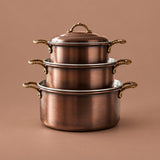
With these simple maintenance steps, you can extend the life of your handmade items like the Oval Shiny Pot Set and add a traditional touch to your kitchen. Showing similar care for other kitchen accessories and presentation products will help you preserve the beauty of your items.
At our Master Coppersmith workshop in Gaziantep, we produce every copper product with the love and care we had on day one, backed by generations of accumulated knowledge. To discover our handmade, pure copper pots and pans that you can safely use in your kitchens, you can visit our Pots and Pans category, or find the one that suits you best among our Bestsellers. Enjoy cooking healthy and delicious meals with the quality of Master Coppersmith.
The Master's Note
The tinning of copper pots in our workshop requires a special mastery passed down from generation to generation. Before tinning, we meticulously clean the copper surface, then apply the hot tin in an even and smooth layer using a special technique. This careful craftsmanship guarantees that your pots can be used safely for many years.
Products Mentioned in This Article


Frequently Asked Questions
Why is tinning important for copper pots?
Tin prevents copper from coming into contact with acidic foods and eliminates the risk of poisoning, thus making copper pots safe for cooking. It also helps preserve the taste and color of the food.
Is it harmful to cook in untinned copper pots?
Yes, cooking or storing acidic foods in untinned copper pots for long periods can lead to copper leaching into the food, potentially causing health issues. Such pots are usually used for decoration or just for boiling water.
How do I know if the tin in my copper pot has worn out?
You can tell that the tin is depleted or worn out when the red copper color becomes visible instead of the silvery tin color inside the pot, or when you notice dullness or scratches.
Can tinned copper pots be washed in the dishwasher?
No, tinned copper pots should never be washed in a dishwasher. High temperatures and chemical detergents damage the tin layer and shorten its lifespan. They should be washed by hand with warm water and a soft sponge.
How often should a copper pot be re-tinned?
Although it varies depending on usage frequency, the tin of a heavily used copper pot should be checked once a year and renewed if necessary. For those used less frequently, this period can be every 2-3 years.
Explore: Pots and Pans
Best Sellers


