

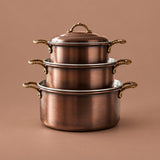


What is a Copper Sahan?

In brief: A copper sahan is a shallow, round, lidded copper pan with a tin-lined interior, handcrafted by our masters using Gaziantep's ancient coppersmithing tradition. It is generally used for cooking and serving breakfast items (eggs, menemen) and small portions of food hot.
- Copper sahans provide a unique flavor to dishes thanks to their excellent heat conductivity and are also ideal for direct serving.
- Genuine handmade copper sahans are distinguished by hammer marks, a specific weight, and smooth interior tinning.
- For long-lasting and healthy use of sahans, hand washing, quick drying, and regular inspection of the tinning are of great importance.
An indispensable tradition of our kitchens, the copper sahan is a tin-lined copper pan designed as shallow, round, and lidded, primarily used for cooking and presenting breakfast dishes and small portions. Each sahan, emerging from the hands of our masters in Gaziantep's ancient coppersmithing tradition, adds an aesthetic touch to kitchens while deepening flavors.
What is a Copper Sahan Used For?
A copper sahan is a versatile kitchen assistant and is especially ideal for fast-cooking, small-portioned dishes. Thanks to its excellent heat conductivity, the flavor of the food cooked inside is enhanced and cooked evenly.
- Breakfast Delights: Stars of the breakfast table, such as various egg dishes (eggs in a sahan, menemen), eggs with sujuk, or melting cheese, take on a whole new flavor in a copper sahan. Special designs like the Handmade Tin-Lined Pure Copper Breakfast Egg Sahan 14 cm enhance the enjoyment of your breakfast.
- Main Dishes and Appetizers: Copper sahans can also be preferred for small portions of roasted meat (kavurma), sautéed mushrooms, or shrimp in butter. They are essential for those who want to cook traditional dishes using original methods.
- Presentation: Food cooked in a sahan is usually served directly in it. This helps keep the food warm while adding a traditional and aesthetic atmosphere to the table. Engraved sahans like the Engraved Silver-Color Tin-Lined Pure Copper Sahan 16 cm add elegance to your presentations.
This versatility of copper sahans transforms it from just a cooking tool into a serving object.
How to Recognize a Genuine Copper Sahan?
Although there are many different sahans on the market, distinguishing a genuine handmade pure copper sahan is possible with the experience of our masters. Here are some important points to pay attention to:
- Craftsmanship and Hammer Marks: Genuine copper sahans are usually shaped by hammering in master hands. The light hammer marks you can see on them are the clearest sign of this manual labor and originality. Machine-made products do not have such marks; their surfaces are smooth and have the air of mass production. Each product such as the Black Hammered Hand-Engraved Traditional Pure Copper Sahan 14 cm produced in Usta Bakırcı workshops reflects this authenticity.
- Weight and Thickness: Pure copper sahans generally have a certain weight because they are made of quality material. Lightweight and thin copper-look products may be alloy or low-quality copper. Thick copper retains heat better and lasts longer.
- Interior Tinning: The interior of a real copper sahan must be tinned. Tin provides a healthy usage by cutting off the copper's direct contact with food. It is important that the tin layer is coated smoothly, brightly, and evenly.
- Handle and Grip Connections: In quality copper sahans, handle and grip connections are made with sturdy rivets. Loose, wobbly, or weak-looking connections may indicate poor product quality.
- Origin and Master Expertise: Products coming from cities where coppersmithing is deeply rooted, such as Gaziantep, are generally more reliable. Workshops like Usta Bakırcı combine traditional methods with modern quality standards through the experience of masters.
By paying attention to these details, you can acquire a copper sahan that is not only aesthetic but also healthy and long-lasting.

Why is the Interior Tinning of a Copper Sahan So Important?
Tinning the interior surface of copper sahans is not just an aesthetic choice, but also a vital necessity for health and safety. This method, applied by our masters for generations, has solidified copper's place in our kitchens.
Although copper is a metal that conducts heat very well, it can react when it comes into direct contact with acidic foods (lemon, vinegar, tomato, etc.). As a result of this reaction, copper oxides may form. This is where tinning comes into play:
- Health and Safety: Tin creates a protective barrier between copper and food. Thanks to this barrier, acidic foods are prevented from interacting directly with copper, and potential health risks are avoided. A tinned copper sahan is suitable for cooking food safely.
- Flavor Preservation: Tinning prevents the taste and color of food from changing by interacting with copper. Thus, it preserves the original flavor of your dishes.
- Long-Lasting Use: A properly applied tinning extends the life of your copper sahan. The tin layer delays the wear and corrosion of the copper.
However, tin also has a lifespan. Depending on intensive use or scratches, the tin layer can wear out. If you notice darkening, scratching, or the copper color becoming visible in the tin layer, it is important to have your sahan re-tinned. In our workshop in Gaziantep, our masters meticulously perform this traditional tinning process. It is generally recommended to check it every 1-2 years depending on intensive use and to perform a tin renewal process if necessary. This ensures your sahan remains both healthy and long-lasting.
How to Clean and Maintain a Copper Sahan?
Knowing the correct cleaning and maintenance methods is very important to preserve the first-day shine and functionality of your copper sahan. With practical information passed down for generations by our masters in Gaziantep, you can take care of your sahans with diligence.
- Hand Washing is a Must: Never wash your copper sahans in the dishwasher. The high heat and harsh detergents of the dishwasher will both darken the outer surface of the copper and damage the inner tin layer. Instead, wash it by hand using warm water, a soft sponge, and a gentle dish soap.
- Quick Drying: Dry your sahan thoroughly with a soft cloth immediately after washing. This step is very important to prevent water spots from remaining. Water spots can cause the copper to darken over time.
-
Natural Polishing Methods: To remove tarnish on the outer surface of the copper and restore its shine, you can prefer natural methods:
- Lemon and Salt: Dip half a lemon in salt and gently rub the copper surface. Then rinse with warm water and dry. This method is quite effective for light tarnishing.
- Vinegar and Flour: Mix a small amount of vinegar and flour to create a paste. Apply this paste to the copper surface and let it sit for 15-20 minutes. Then rinse with warm water and dry.
- Special Copper Polishes: You can also use commercially available copper polishing products, but be sure to follow the instructions for the product and avoid abrasive chemicals.
- Acidic Food Warning: Do not leave acidic foods (lemon, tomato, vinegar, etc.) in sahans where the inner tin layer is worn or scratched, nor cook them for a long time. If there is significant wear in the tin, consult our masters for a re-tinning process.
- Avoid Sharp Tools: Use wooden or silicone kitchen utensils instead of metal spatulas or sharp-tipped spoons so as not to damage the tin on the inner surface of the sahan.
With these simple maintenance steps, you can preserve the beauty and usefulness of your copper sahan for years. Copper products are valuable heirlooms that can be passed down from generation to generation when properly cared for. Similar maintenance recommendations apply to other copper products in our Pots and Pans category.
What to Consider When Buying a Copper Sahan?
When buying a copper sahan to add a traditional touch to your kitchens or to give a meaningful gift to your loved ones, making the right choice is important. With the experience we have gained in our workshop in Gaziantep, we have compiled the main points you should pay attention to:
- Material Quality: Ensure the sahan is made of 100% pure copper. There may be products on the market that look like copper but contain alloys or are made of very thin material. Pure copper is the most heat-conductive and the most durable.
- Craftsmanship and Hammering: Prefer hand-hammered products instead of machine-made ones. Hand-hammering strengthens the structure of the copper and makes each product unique. The light hammer marks on it are a sign of our masters' labor. Products like the Lidded Mini Model Hand-Engraved Pure Copper Sahan carry this meticulous craftsmanship.
- Interior Tinning Quality: Ensure that the interior surface of the sahan is tinned smoothly, brightly, and with uniform thickness. Tinning is not just a coating, but also indispensable for healthy use. There should be no scratches, darkening, or wear in the tin.
- Sturdiness of Handle and Grips: Ensure that the handles or grips of the sahan (if any) are firmly riveted and made of heat-resistant material. Usually, brass or wooden handles are preferred.
- Size and Purpose of Use: Choose the size by thinking about what you will use the sahan for. Small sahans (14-16 cm) are ideal for single-serving breakfast items, and medium sizes (18-20 cm) for larger tables or appetizers. You can also find sahan options in different sizes within our Home Gift Sets.
- Brand and Reliability: Shopping from a well-established and reliable brand in the field of coppersmithing gives you assurance regarding the quality and originality of the product. Usta Bakırcı, as a brand that keeps Gaziantep's ancient coppersmithing tradition alive, is known for its handmade and pure copper products.
Thanks to these tips, you can make a copper sahan choice that will add value to your kitchens, that you can use with pleasure for years, or that you can proudly gift to your loved ones.
From the heart of Gaziantep, emerging from the skillful hands of our masters, copper sahans bring not just an item but also a deep-rooted culture and art into your kitchens. Whether you are looking for a special gift for yourself or for your loved ones, our handmade copper sahans are waiting for you to add a traditional warmth and unique flavor to your tables. You can discover the beauty that this ancient craft brings to modern kitchens by browsing our handcrafted products in all our Pots and Pans and Presentation Products categories.
Master's Note
In our workshop, each copper sahan is shaped by being hammered by the skillful hands of our masters who carry Gaziantep's hundreds-of-years-old coppersmithing heritage. The interior tinning is one of the most delicate steps for both your health and the flavor of your food; therefore, we ensure the tin is smooth and complete.
Products Mentioned in the Article


Frequently Asked Questions
Why should the inside of a copper sahan be tinned?
The inside of a copper sahan is tinned to cut off the contact of copper with acidic foods and to prevent potential health risks. Tin also preserves the taste and color of the food.
Can a copper sahan be washed in the dishwasher?
No, copper sahans should never be washed in the dishwasher. The high heat and harsh detergents of the dishwasher will damage both the outer surface of the copper and the inner tin.
How often should a copper sahan be tinned?
Depending on intensive use, the tin layer of copper sahans should be checked every 1-2 years and re-tinned by masters in case of wear.
Is it normal for a copper sahan to darken?
Yes, the oxidation and darkening of the outer surface of copper over time is a natural process. You can restore its shine with natural methods such as lemon and salt or vinegar and flour.
Can acidic foods be cooked in a copper sahan?
Acidic foods can be cooked in tin-lined copper sahans, but it is important not to leave acidic foods in them for a long time if there is significant wear or scratches on the tin layer.
Discover: Pots and Pans
Best Sellers


