



Which Drinks Can Be Stored in a Copper Flask?

In short: Copper water bottles are ideal, especially for neutral drinks like water. It is traditionally believed that they enhance the taste and quality of water. However, sensitive drinks such as acidic beverages (lemonade, vinegar-based drinks) or dairy products are not recommended due to prolonged contact with copper.
- Pure water is the most suitable beverage for storage in a copper bottle; it is traditionally believed to improve freshness and flavor.
- Acidic drinks (lemonade, fruit juices) and dairy products should not be stored in a copper bottle for long periods, as they may react with the copper.
- To extend the life of your copper bottle, you should hand-wash it, dry it thoroughly, and polish it periodically using natural methods.
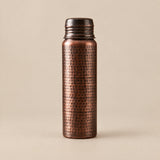
Handcrafted copper bottles, meticulously hammered in our workshop in Gaziantep, are a modern interpretation of the centuries-old tradition of carrying water. So, which drinks can you safely store in these unique and healthy vessels? Generally, pure water is the best liquid for copper bottles because copper helps maintain the water's freshness and is traditionally believed to enhance its taste. However, due to the nature of copper, there are some points to consider, especially regarding acidic beverages.
Why Is Water the Best Choice for a Copper Bottle?
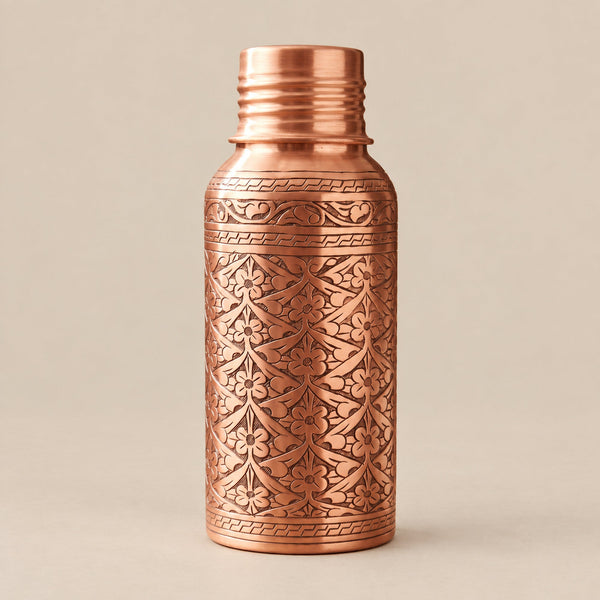
Pure and clean drinking water is the most ideal liquid to store in a copper bottle. Since ancient times, it has been believed that keeping water in copper vessels gives it a special taste and freshness. Our masters, who have been working with copper in Gaziantep for many years, state that the interaction between water and copper adds a distinct flavor. The interaction between the water's natural minerals and the copper forms the basis of this traditional preference. Modern scientific research also supports the antimicrobial properties of copper. Filling your bottle at night and letting it sit until morning is enough to experience this traditional effect. Among the copper bottles carefully prepared by our workshop, products such as the round red hand-hammered pure copper 750 ml bottle are designed for you to carry your water safely.
Which Drinks Should Be Avoided in a Copper Bottle?
Drinks with high acidity and dairy products should not be stored in a copper bottle for a long time. This is important safety information. Acidic foods and drinks (such as lemon juice, vinegar, orange juice, or tomato juice) can react with the copper and cause it to dissolve. This can change the taste of the drink and may lead to undesirable health consequences. This rule is especially crucial for non-tinned copper bottles. Milk and dairy products can cause spoilage and unpleasant odors on the copper surface. For these types of drinks, different materials such as glass or stainless steel should be preferred. If you want to carry a drink for a short period (e.g., 1-2 hours) and it has low acidity, it may be fine, but you should definitely avoid long-term storage. The table below summarizes the suitability of different types of drinks for storage in a copper bottle:
| Drink Type | Storage in Copper Bottle | Description |
|---|---|---|
| Water | ✅ Ideal | Traditionally preferred; maintains freshness and flavor. |
| Fruit Juice (Acidic) | ❌ Avoid | Acids like lemon and orange react with copper, affecting taste and safety. |
| Milk and Dairy Products | ❌ Avoid | Can cause spoilage and unpleasant odors. |
| Herbal Teas (Warm/Cold) | ✅ Short-term | May be suitable if acidity is low and it is only for short-term transport. |
| Black Coffee/Tea (Cold) | ✅ Short-term | May be suitable if acidity is low and it is only for short-term transport. |

Tips for Using and Maintaining Your Copper Bottle
Applying the correct care methods is crucial to extend the life of your copper bottle and ensure its hygiene. Here are some practical steps derived from the experience of our masters in Gaziantep:
- Cleaning: Hand-wash your bottle after every use with warm water and a little soap. You can use a soft brush or sponge to clean the inside. Never put it in the dishwasher, as harsh chemicals and high heat will permanently damage the copper's natural structure and shine.
- Drying: After washing, thoroughly dry the inside and outside of the bottle with a soft, lint-free cloth. Residual moisture can lead to spotting. Turn the bottle upside down to ensure it dries completely, preventing water marks.
- Polishing: Copper can darken over time as it oxidizes. This is a natural occurrence and does not affect the quality of the copper. Our workshop recommends gently rubbing the outside of your bottle with a mixture of half a lemon and fine salt. You can then rinse and dry it to restore its original shine. You can perform this process every 2-3 weeks or depending on how much your bottle darkens.
- Storage: When not in use, store your bottle in a dry, airy place with the lid slightly open or completely removed. This prevents moisture buildup and potential odors inside.
With these simple care steps, you can preserve the beauty and functionality of your bottle, which is among your best-selling copper products, for many years.
Tinned vs. Untinned Copper Bottles: What Are the Differences?
Copper bottles can be produced as tinned or untinned, and this feature directly affects their usage. This distinction is of great importance, especially regarding the contact of copper products with food.
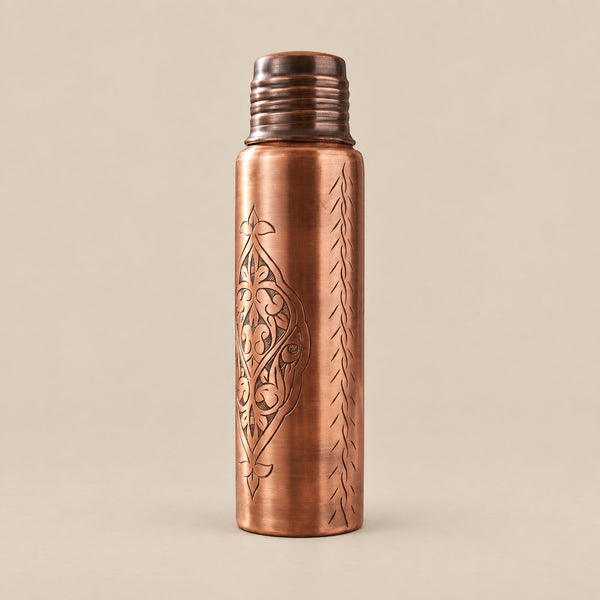
- Untinned Copper Bottles: Generally featuring an ornate exterior and a natural copper interior, these bottles are ideal, especially for water. Direct contact of the water with the copper allows you to benefit from its traditional advantages. However, as mentioned, they are not suitable for acidic drinks. Our masters in Gaziantep highlight the pure beauty and craftsmanship of untinned copper. For example, our products like the 1-Liter Hand-Crafted Black Ornate Pure Copper Bottle combine the aesthetics and functionality of pure copper.
- Tinned Copper Bottles: This means the inner surface of the bottle is coated with a thin layer of tin. Tin prevents direct contact between the copper and the food, keeping acidic drinks from reacting with the copper. Consequently, slightly acidic drinks like lemonade can be safely stored in tinned bottles for short durations, or items like yogurt can be kept in containers like yogurt buckets. However, since most bottles are specifically designed for water, fewer bottles are tinned inside. If a bottle is tinned, this must be explicitly stated in the product description. Regular monitoring of the tin layer and renewing it (re-tinning) when worn is important. Re-tinning is very common and essential for copper pots and pans; while pure copper is generally preferred for water in our bottles, some of our custom orders or designs may have tinned options. For example, products like the 750 ml Round Silver Tinned Handcrafted Pure Copper Bottle are an option for those who prefer the extra protection offered by tinned copper. If you are using a tinned copper bottle, avoid using metal spoons or hard objects to prevent scratching the inner tin layer.
What to Consider When Choosing a Copper Bottle?
Choosing a copper bottle suitable for your needs and usage habits is important for a long-lasting and enjoyable experience. Here are the main points you should consider:
- Material Quality: You should prefer bottles produced by hand from pure and high-quality copper. The copper we use in our Gaziantep workshop is 99.9% pure. Products bearing our workshop's stamp offer this quality guarantee and promise a product that will accompany you for many years.
- Craftsmanship: Details like hand-hammering or hand-ornamentation show that the bottle is a work of art beyond just being a container. The uniformity of the patterns, the smoothness of the bottle's edges, and the overall finish quality are signs that it came from master hands.
- Size and Capacity: Volumes between 500 ml and 1.5 liters are ideal for daily use. For travel, sports, or extended use, larger 1.6-liter bottles may be preferred, while 1-liter ornate pure copper bottles are available for lighter and more portable options. Choosing the size that best fits your needs allows you to use your bottle more efficiently.
- Lid Mechanism: A leak-proof lid is critical for carrying your bottle safely in your bag or by your side. Screw-on lids generally provide a more reliable seal and prevent liquid spills.
- Intended Use: If you are going to use it only for water, you can choose an untinned pure copper bottle. However, if you are looking for flexibility for different drinks, you might look for a tinned option (though tinned products are rarer specifically for water bottles and are usually preferred for food containers).
Each copper bottle emerging from the hands of our masters in Gaziantep is not just a carrier vessel, but also a symbol of a tradition passed down from the past and meticulous craftsmanship. These special vessels, which seem to come alive when they meet water, both support a healthy lifestyle and add an authentic touch to your kitchen or daily life. You can browse our products to experience this unique journey and discover your own copper bottle.
Master's Note
In our workshop in Gaziantep, each copper bottle is shaped by the hands of our masters and reaches you in the most natural form of pure copper. Rinsing your bottle with water and drying it before the first use, then filling it with drinking water and letting it sit overnight, is enough to discover the unique flavor copper adds to the water.
Products Mentioned in This Article


Frequently Asked Questions
Why is a copper bottle recommended only for water?
While copper interacts safely with neutral drinks like water, it can react with acidic drinks and dairy products, leading to undesirable results.
How should I clean the inside of my bottle?
Hand-wash the inside of your copper bottle with warm water and a small amount of dish soap using a soft brush or sponge, then rinse and dry thoroughly.
What should I do if my copper bottle tarnishes?
Tarnishing is a natural occurrence for copper. You can restore the original shine by gently rubbing the outer surface with a mixture of half a lemon and some salt, then rinsing.
Can a copper bottle be washed in the dishwasher?
No, copper bottles should absolutely not be washed in the dishwasher. The harsh detergents and high heat of the dishwasher will permanently damage the copper and discolor it.
What should I pay attention to when buying a copper bottle?
Take care to choose a bottle produced by hand from pure and high-quality copper, equipped with a leak-proof lid, and with a capacity suitable for your intended use (usually water).
Explore: Bottles
Best Sellers


