



How to Polish a Copper Coffee Pot?

In brief: You can use natural materials like lemon and salt, vinegar and flour, or baking soda to polish your copper coffee pot. With these methods, it is possible to gently scrub away the tarnished surfaces of your coffee pot and restore it to its original shine by rinsing it with plenty of water afterwards.
- Copper coffee pots tarnish over time due to natural oxidation; this is normal and can be easily polished with natural household items.
- Mixtures such as lemon-salt, vinegar-flour, or baking soda-lemon offer effective and safe natural solutions to remove tarnish from copper surfaces.
- You can extend the lifespan of your copper coffee pots and maintain their shine by avoiding the dishwasher and not using bleach or abrasive chemicals.
Your handmade copper coffee pots, born from the ancient coppersmithing tradition of Gaziantep, may lose their shine and tarnish over time. Don't worry, this is natural to copper, and it is quite easy to return your coffee pot to its original sparkle with a few simple, natural methods. The key is knowing the right materials and gentle application techniques.
Why Does Your Copper Coffee Pot Tarnish?
The tarnishing of your copper coffee pot is a completely normal chemical process caused by copper naturally oxidizing when it comes into contact with air and moisture. This tarnish is a thin layer that forms on the surface of the copper and does not mean your product is of poor quality; on the contrary, it is a sign that it is pure copper.
Exposure to high heat and contact with water and minerals in the air can accelerate the copper's tarnishing process. Each handmade copper product we carefully hammer in our workshop in Gaziantep undergoes this natural change over time. However, with the right care methods, you can easily remove this tarnish and maintain the aesthetic appearance of your copper coffee pot.
Copper Coffee Pot Polishing Methods: Natural Solutions You Can Apply at Home
As Master Coppersmiths, we recommend that you prefer natural and traditional methods over chemical-based products for the maintenance of your handmade items. Here are effective and practical methods you can easily apply at home to make your copper coffee pot shine:
- Lemon and Salt Method: This is one of the most well-known and effective methods for polishing copper.
- Cut a lemon in half.
- Sprinkle about a teaspoon of fine salt onto the cut lemon.
- Gently rub the salted lemon onto the surface of your tarnished copper coffee pot. You can focus more on areas where the tarnishing is heavy.
- After waiting a few minutes, rinse your coffee pot thoroughly with plenty of warm water.
- Dry immediately with a soft, dry cloth. This prevents water spots from forming and new tarnishing.
- Vinegar and Flour Mixture: This mixture has a paste-like consistency and is ideal for stubborn stains on copper surfaces.
- In a small bowl, mix two tablespoons of white vinegar with one tablespoon of flour and a teaspoon of salt. Continue mixing until it reaches a paste consistency.
- Apply the paste you prepared to the tarnished areas of your copper coffee pot using a soft cloth or sponge.
- Let the paste sit on the copper for about 10-15 minutes.
- After the time has passed, rinse your coffee pot with warm water and dry it with a soft cloth.
- Baking Soda and Lemon/Vinegar: This can be used for lighter tarnishing or general polishing.
- Mix one tablespoon of baking soda with half a lemon's juice or one tablespoon of vinegar to create a slightly thick paste.
- Apply this paste to the surface of your copper coffee pot with a soft cloth and rub gently in circular motions.
- After a few minutes, rinse with plenty of water and be sure to dry thoroughly.

Differences Between Tinned and Untinned Copper Coffee Pot Care
Copper coffee pots are generally produced with their inner surfaces coated in tin. This tin layer is important for both health and durability, as it prevents the copper from coming into direct contact with food and drinks. However, some coffee pots may be untinned for decorative purposes or only on their outer surfaces.
| Feature | Tinned Copper Coffee Pot | Untinned Copper Coffee Pot |
|---|---|---|
| Purpose of Use | Safe for brewing coffee and preparing drinks. | Generally intended for decorative purposes or for short-term use with non-acidic drinks. |
| Inner Surface Care | If the inner tin layer wears down, it needs to be re-tinned. Do not leave acidic foods in it for long periods. | Absolutely avoid putting acidic (lemon, tomato, vinegar, etc.) foods and drinks on its inner surface. |
| Polishing | You can polish the outer surface using the natural methods above. Clean the interior gently in a way that will not damage the tin. | You can polish the entire surface, but be careful regarding the interior surface's contact with food. |
| Safety Note | Tin prevents copper from passing into food and ensures safe use. The tin layer should be renewed when worn. | Copper ions may dissolve upon prolonged contact with food. Therefore, it is not suitable for food. |
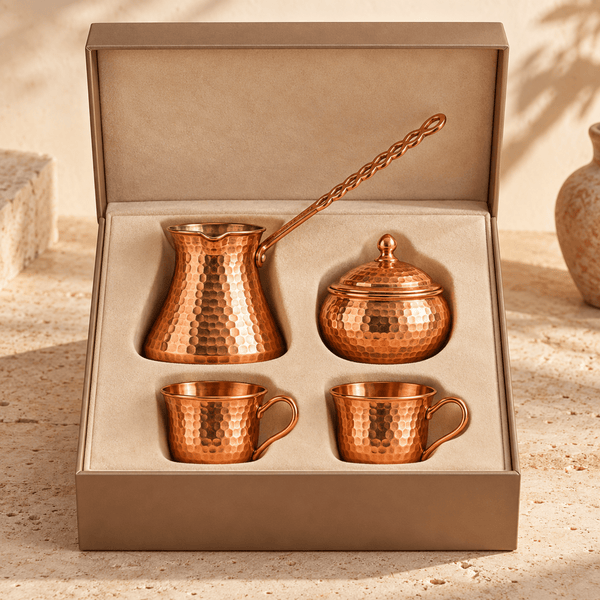
In our products such as the Copper Touch to the New Home – Housewarming Gift Set that you can obtain from Master Coppersmith, our coffee pots are offered tinned and are designed for safe use. It is normal for the tin layer to wear down over time; in this case, it is important to get help from a professional tin smith.
What You Should Never Do When Caring for a Copper Coffee Pot
You should absolutely avoid certain practices that will shorten the life of your copper coffee pot and damage its beauty:
- Dishwasher: Copper products should never be washed in the dishwasher. The high temperatures, harsh chemicals, and abrasive detergents of the dishwasher damage the natural structure of the copper, causing it to tarnish and stain.
- Bleach and Harsh Chemicals: Bleach or similar harsh chemicals oxidize the copper surface and lead to permanent damage. Only use natural cleaners.
- Abrasive Sponges and Wire Brushes: Copper surfaces are very delicate. Using wire brushes, coarse scouring pads, or abrasive sponges will scratch the surface of the copper and cause it to lose its shine. Always use soft cloths or sponges.
- Leaving Acidic Foods and Drinks for a Long Time: Especially in untinned copper products, leaving acidic foods and drinks such as lemon, vinegar, and tomato for a long time can cause copper ions to dissolve. Even in tinned products, this risk can arise if the tin layer is worn.
Tips from the Master Coppersmith for Long-Lasting Shine
There are a few simple but effective tips coming from the experience of our masters in Gaziantep to maintain the shine of your copper coffee pot for a long time:
- Regular Cleaning: After each use, wash your coffee pot gently with warm water and mild dish soap (chemical-free).
- Immediate Drying: Never leave your coffee pot wet after washing. Dry it immediately and completely with a soft cloth. Moisture is the greatest enemy of copper and accelerates tarnishing.
- Correct Storage: Store your copper coffee pot in a dry place away from moisture. If possible, keeping it in a closed cabinet or box where it will not get air slows down tarnishing.
- A Touch of Olive Oil: After polishing, put a very small amount of olive oil on a soft cloth and rub it onto the outer surface of your coffee pot to polish it. This creates a thin protective layer that helps the shine last longer.
- Professional Re-tinning: If the tin layer inside your coffee pot has worn away, for your health, be sure to take it to a professional tin smith to have it re-tinned. This extends the life of your product and ensures safe use.
In our workshop in Gaziantep, you can find many different copper products such as copper serving products and kitchen accessories, each meticulously handmade. Your copper coffee pot is not only for brewing coffee but also a great piece to add traditional elegance to your kitchen and presentations. With proper care, it will become an heirloom that you can use for generations.
We hope these tips help you polish your copper coffee pot as if it were brand new. For those who want to bring the warmth of copper and the value of craftsmanship into their homes, you can examine our special products such as the First Coffee in the New Home – Premium Housewarming Gift Set. As the Master Coppersmith family, we continue to keep the spirit of traditional coppersmithing alive.
Master's Note
We consider regular and proper maintenance very important so that every piece of copper we produce by hand in our workshop lasts a long time. When polishing your copper coffee pots, avoid excessive scrubbing and be sure to dry them thoroughly after every use; this is the simplest way to delay tarnishing.
Products Mentioned in the Article


Frequently Asked Questions
How often should a copper coffee pot be polished?
Depending on the intensity of the tarnish and how often you use it, polishing your copper coffee pot once a month or every two months will generally be sufficient. You can maintain its shine for longer with regular and gentle cleaning.
Can I use chemical products to polish a copper coffee pot?
As Master Coppersmiths, we strongly recommend that you do not use bleach or cleaning products containing harsh chemicals to polish your copper coffee pot. Such products can damage the surface of the copper, leading to permanent stains and abrasion. Natural methods are always safer.
What should I do if the inside of the coffee pot is not tinned?
If the inside of your coffee pot is not tinned, you should only use it for decorative purposes or keep non-acidic liquids like water in it for short durations. Leaving acidic foods and drinks in untinned copper for a long time can pose health risks.
Can a copper coffee pot be washed in the dishwasher?
No, copper coffee pots should never be washed in the dishwasher. The high temperatures and harsh detergents of dishwashers can damage the surface of the copper, causing it to tarnish, change color, and deform. Hand washing should always be preferred.
What can I do to prevent the coffee pot from tarnishing again after polishing?
You can delay tarnishing by storing your coffee pot in a dry place away from moisture after polishing. Ensure you dry it thoroughly after each use and can create a protective barrier by applying a thin layer of olive oil to the outer surface.
Discover: Copper Cups
Best Sellers


