


How to Identify Genuine, Food-Safe Copper Water Bottles?

In short: A genuine, food-safe copper water bottle is distinguished by its substantial weight compared to cast or thinly coated products, natural hammer marks from handcrafted production, and a uniform pure tin lining on the inside. Raw copper should not be exposed on the interior, and areas in contact with water and food must undergo traditional tinning.
- The interior of a food-safe copper water bottle must be lined with pure tin.
- A genuine handcrafted copper water bottle has irregular hammer marks at the micron level and a solid weight, unlike mass-produced items.
- To ensure a long lifespan, copper water bottles should be kept away from dishwashers, bleach, and acidic beverages.
A genuine, food-safe copper water bottle is distinguished by its substantial weight compared to cast or thinly coated products, natural hammer marks from handcrafted production, and a uniform pure tin lining on the inside. Raw copper should not be exposed on the interior, and areas in contact with water and food must undergo traditional tinning. When choosing a quality copper water bottle, physical details such as metal thickness, the color of the interior lining, and the smoothness of the rim are key factors.
How can you tell if a copper water bottle is genuine?
A genuine copper water bottle is distinguished by its high specific gravity, rapid heat conductivity, and natural color changes on its surface. Imitation products made of aluminum or steel with copper-colored paint or a thin electrolytic coating are extremely light and do not provide the solid feel of copper.
To identify a genuine product, you can follow these physical checks:
- Weight Check: Pure copper is a dense metal. For example, an empty 1-liter water bottle made of raw copper typically weighs between 400 and 450 grams. Aluminum-coated containers of similar size weigh around 150–200 grams.
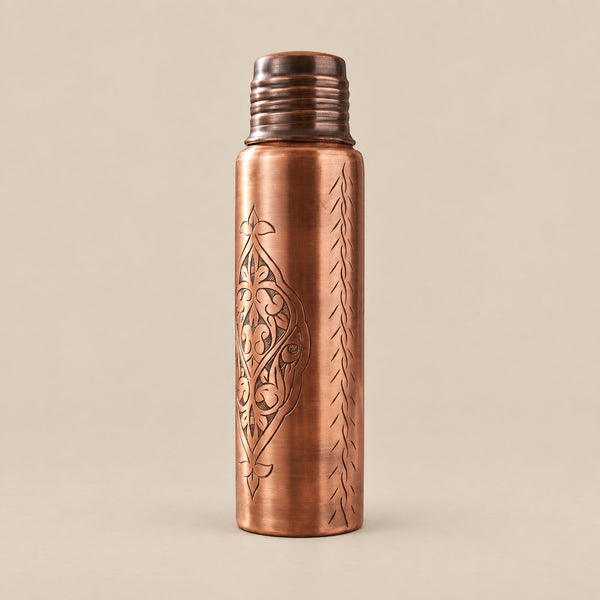
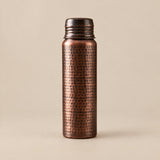
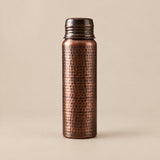
- Hammer and Craftsmanship Marks: Handcrafted pure copper water bottles feature masterfully struck hammer marks on their surface. While marks from machine pressing in mass production are perfectly symmetrical, those from handcrafting are slightly irregular and unique. This handcrafted texture is clearly visible on our Black Hammered Handcrafted Pure Copper 1-Liter Water Bottle.
- Sound and Ring Test: When tapped lightly, a pure copper plate produces a solid, short sound. Thin sheet metal or aluminum products produce high-pitched, prolonged ringing sounds.
- Natural Oxidation: Genuine copper darkens over time as it comes into contact with air and moisture. Products whose color never changes or reveal gray metal underneath when scratched are coated.
What should the interior of a food-safe copper water bottle look like?
The entire interior surface of a food-safe copper water bottle that comes into contact with water must be smooth and lined with pure tin. Since copper metal can oxidize when it comes into direct contact with water or food components, tinning the interior using traditional methods is a fundamental rule of food safety.
When examining the interior lining, the following points should be considered:
- Silvery-White Color: A pure tin lining gives the interior a silvery, slightly lustrous, or matte appearance. The copper’s own reddish color should not be visible inside at all.
- Lining Integrity: There should be no areas left untinned at the bottom, neck joints, or rim edges of the water bottle.
- Uniform Tin Thickness: Products hand-tinned over a fire may show natural flow marks in the tin layer, but there should be no bubbling, peeling, or cracking. The interior lining of the Round Silver-Tinned Handcrafted Pure Copper 750 ml Water Bottle is meticulously completed to make it suitable for daily water consumption.

How can you distinguish a hand-hammered copper water bottle from a machine-made one?
A hand-hammered copper water bottle is distinguished by the variations in depth and angle of the hammer marks on its surface, while machine-made water bottles are completely smooth or feature uniform machine-stamped patterns. The copperware crafted by master artisans in our Gaziantep workshop stands apart from the flawless but cold appearance of mass-produced items.
The following table shows the main differences between the two production methods:
| Feature | Handcrafted Hammered Copper Water Bottle | Machine-Made / Factory-Produced Water Bottle |
|---|---|---|
| Surface Texture | Irregular, deep, hand-struck hammer marks | Completely smooth or uniform laser-printed patterns |
| Metal Thickness | Generally thicker copper plate (0.8 mm–1.2 mm) | Generally thin sheet metal (0.4 mm–0.6 mm) |
| Interior Lining | Traditional hot pure tinning over a fire | Chemical or sprayed thin tin coating |
| Feel | Feels solid, heavy, and sturdy in the hand | Lightweight and thin |
| Lifespan | Can be passed down through generations by re-tinning for years | May deform quickly due to its thin construction |
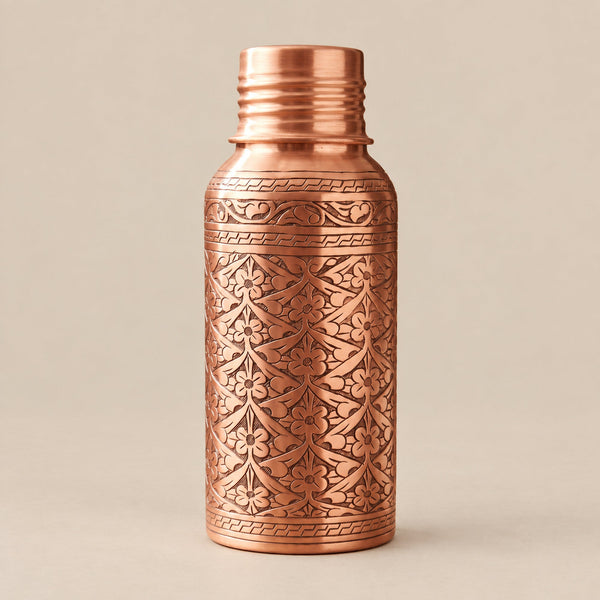
All products in our Copper Water Bottles collection prepared in our workshop are shaped using traditional hammering techniques. For those seeking a larger capacity option, the Handcrafted Tinned Pure Copper 1.6 L Water Bottle with a Glossy Chased Design clearly reflects craftsmanship with both its capacity and unique chased workmanship.
What features should you look for when buying a copper water bottle?
When purchasing a copper water bottle, pay attention to the bottle’s wall thickness, the cap’s leak-proof mechanism, the quality of the interior tin lining, and the craftsmanship details around the rim. The long lifespan of these products, traditionally preferred as water containers, is possible with proper craftsmanship.
You can perform the following checks when shopping:
- Cap and Thread Structure: The cap of the copper water bottle should close easily, and the leak-proof gasket should be made of food-safe silicone. Smoothly machined cap threads prevent sticking when tightening.
- Tinning Around the Rim: The interior tin lining should continue seamlessly to the outer edge of the bottle, up to the point where the lips make contact.
- Material Declaration: You should ensure that the product is made from 100% pure copper and that no alloys containing nickel or lead are used on the interior surface.
- General Kitchen-Friendly Design: If you prepare traditional presentations at home, you can complete your Copper Kitchen concept by pairing your water bottle with Copper Cups or Pitchers.
Which beverages should not be stored in a copper water bottle?
Acidic beverages such as lemon juice, vinegar, turnip juice, tomato juice, and carbonated soft drinks should never be stored in a copper water bottle. Acidic liquids react with copper and tin, causing the lining to wear down and the beverage’s taste to deteriorate.
It is recommended to store only drinking water in a copper water bottle. While beverages such as milk and ayran can be used in tinned containers for short-term serving, they should not be left in closed, long-term storage containers like water bottles. Letting water rest in a copper container is a common practice in our traditional culture; however, a slice of lemon or a drop of vinegar should not be left in the water.
How should a copper water bottle be cleaned and maintained?
A copper water bottle should be cleaned only with lukewarm water and a soft sponge; dishwashers and bleach should never be used. High heat and harsh chemicals damage the polish on the copper’s exterior surface and strip the tin lining inside.
You can maintain your copper water bottle step by step as follows:
- Daily Cleaning: After use, rinse the inside of the water bottle with lukewarm water. If necessary, add a few drops of natural dish soap, wipe with a soft sponge, and dry immediately.
- Polishing the Exterior: To polish the exterior copper surface that darkens over time, mix equal amounts of salt and lemon juice and apply it to the exterior with a soft cloth. After treatment, rinse thoroughly with water and dry with a drying cloth. Never apply this treatment to the tinned interior surface.
- Drying: Leaving no water droplets inside the water bottle after cleaning prevents tarnishing. Leave the water bottle open to dry.
The water bottles we produce from pure copper in our Gaziantep workshop retain their first-day quality for many years with proper use and regular maintenance. You can browse our collections to examine handcrafted water bottle models suitable for your needs and experience traditional craftsmanship.
The Artisan’s Note
In our Gaziantep workshop, our artisans adjust the depth of each hammer strike by hand while hammering the copper plate. The interior tin lining of your water bottle may become dull over time depending on the frequency of use; this is due to the natural properties of tin and does not pose an obstacle to food safety.
Products Featured in the Text


Frequently Asked Questions
Can a copper water bottle be washed in the dishwasher?
No, a copper water bottle should never be washed in the dishwasher. Harsh chemicals in detergents and high water temperatures wear down the interior tin lining and cause the exterior copper surface to darken.
How can you tell if the inside of a copper water bottle is tinned?
The interior of a tinned water bottle is silvery gray. If you look inside your water bottle and see the reddish color of copper, the product is untinned or the tin has completely worn away.
How long can water be left in a copper water bottle?
In traditional use, it is preferred to let water in a copper water bottle rest at room temperature for 6 to 8 hours. It is recommended to refresh the water inside daily.
Does a copper water bottle darken over time?
Yes, as pure copper comes into contact with air and moisture, it naturally becomes dull or darker over time. This shows the natural state of copper; the exterior surface can easily be restored to its first-day shine by rubbing it with a salt and lemon mixture.
Discover: Water Bottles
Best Sellers


