



How to Identify a Hand-Crafted Copper Tray?

In brief: You can distinguish a genuine handcrafted copper tray by the irregular yet rhythmic hammer marks on its surface, the fact that it is heavier and thicker than mass-produced versions, and the touch of the human hand in its edge and corner details. Each tray reflects the unique artistry and labor of its master.
- Handcrafted copper trays are distinguished from mass-produced ones by the hammer marks on their surfaces, their weight, and their unique patterns.
- It is important for health reasons that the inner surface of copper trays intended for food contact is tin-plated.
- To extend the lifespan of handmade copper trays, gentle cleaning and natural polishing methods should be preferred.
Understanding a truly handcrafted copper tray begins with feeling the sweat and artistry of the masters. Unlike mechanized production, each hammer strike, the unique texture of the worked motif, and the raw form of the material reveal themselves in handmade copper trays. These unique pieces are not just household items, but cultural heirlooms that add soul to your tables and living spaces through the stories they carry.
How to Recognize a Genuine Handcrafted Copper Tray?
To recognize a genuine handcrafted copper tray, you should first use your eyes and fingertips. Every presentation tray shaped in Usta Bakırcı workshops is a reflection of the skill our masters have acquired over years of experience. Here is what you should pay attention to:
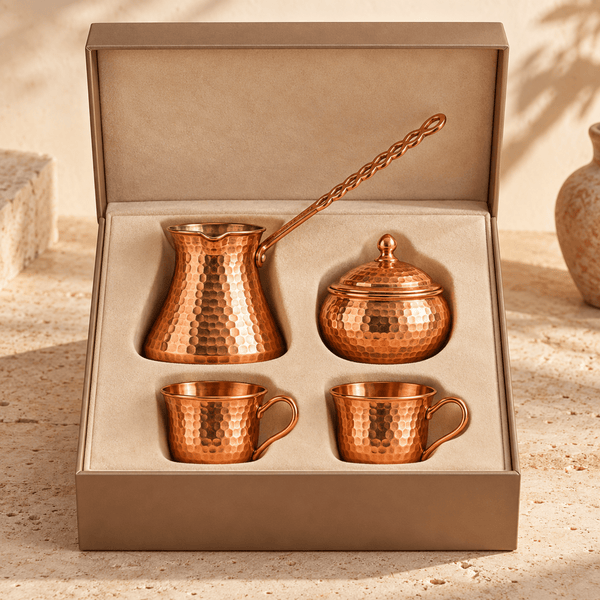
- Hammer Marks and Surface Texture: On the surface of handmade copper trays, there are slight, irregular, yet rhythmic marks left by the hammers used by masters to shape the copper. These marks are like fingerprints for each tray; they are never completely identical. In mass-produced products, the surface is usually smooth and patternless, or the pattern has perfect uniformity. This texture, created as copper sheets are carefully heated and hammered in our workshop in Gaziantep, constitutes the soul of the product.
- Weight and Thickness: Handmade copper trays are generally heavier than their mass-produced counterparts. The reason for this is that masters use thicker, pure copper material for durability and longevity. The fullness and sturdiness you feel when you pick up the tray are among the first signs of good craftsmanship.
- Edge and Corner Craftsmanship: In handmade trays, the edges and corners may have a softer and more organic transition instead of the sharp and mechanical uniformity of machine cuts. Especially in specially engraved copper trays, small differences in edge folds and motif joints reveal the touch of the human hand.
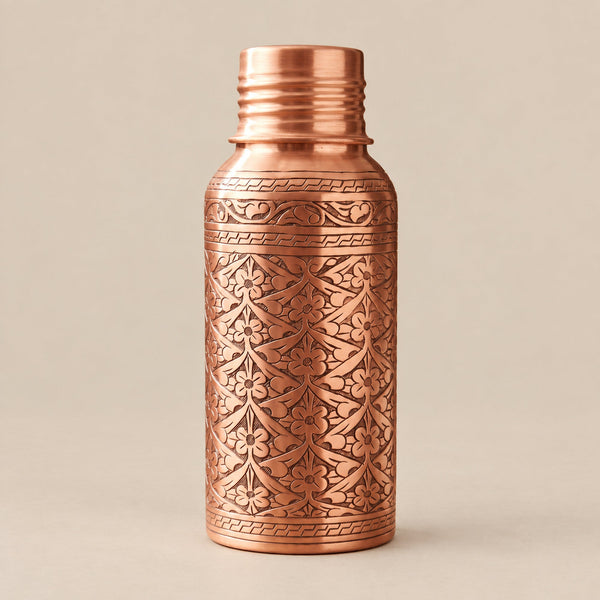
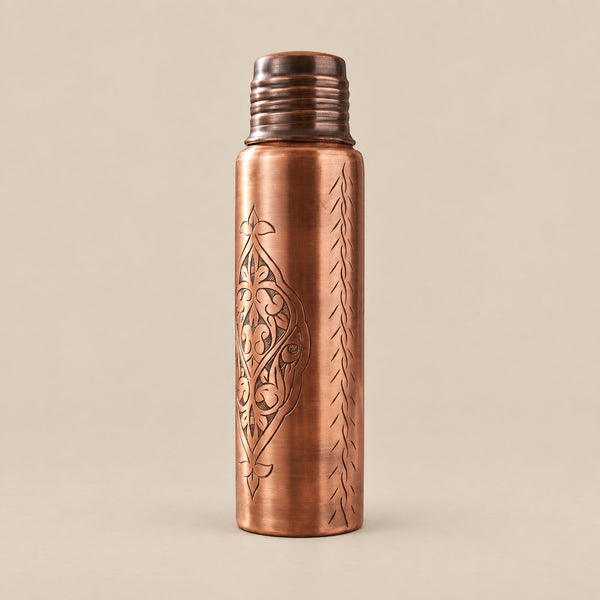
- Originality of Patterns and Motifs: The patterns on handcrafted trays reflect the masters' personal interpretation and manual skill, rather than a flawless repetition like machine printing. The depth of each motif and the nuances in the embossing or carving details reveal the uniqueness of the craftsmanship.
- Handle and Grip Connections: If the tray has handles or grips, pay attention to how they are connected to the tray body. In handmade products, these connections are usually reinforced with riveting or special welding techniques and present an aesthetic integrity.
What Are the Key Differences Distinguishing Handcrafted Copper Trays from Mass Production?
The differences between handcrafted and mass-produced copper trays are not limited to aesthetics; they also determine the quality, durability, and value of the product. The labor and care that our masters in Gaziantep add to each product create qualities that are hard to find in mass production. Here are the main differences between these two modes of production:
| Feature | Handcrafted Copper Tray | Mass-Produced Copper Tray |
|---|---|---|
| Surface Texture | Rhythmic hammer marks, unique irregularities; each product has a unique character. | Usually smooth, uniform, machine-printed patterns; flawless repetition. |
| Material Thickness | Thicker, heavier, and more durable pure copper is used. | Thinner, lighter, and may sometimes contain copper alloys. |
| Patterns and Details | Original, deep, and vivid motifs reflecting the masters' personal interpretation. | Standard, superficial, and repetitive patterns. |
| Structural Integrity | Robust riveting or special welding, designed for long-term use. | Generally fast and cost-effective assembly methods. |
| Value and Soul | Carries cultural heritage, has a story, artistic and high collectible value. | Functional, but with limited artistic value and originality. |
In our workshop, every presentation product is almost reborn in the hands of our masters. During this process, the natural flexibility and durability of copper are utilized to the fullest, so the resulting products are not only aesthetic but also functional and long-lasting.

The Importance and Inspection of Tin-Plating on Copper Trays
Since copper trays are generally used for presentation purposes, they may not come into direct contact with food, but tin-plating is of great importance when serving food or leaving certain foods to sit for short periods. Tin isolates the features naturally found in copper that could react with certain foods, creating a safe surface. So, how can you tell if a copper tray is tin-plated?
- Inner Surface Color: The inner surface of a tin-plated copper tray has a bright or matte silvery-white color, different from the reddish-brown tone unique to copper. This is the most obvious sign that tin has been applied homogeneously over the copper.
- Surface Smoothness: Tin-plating usually makes the inner surface smooth and even. When you run your hand over the inner surface of the tray, you should not feel any roughness or different textures. However, slight brush marks or ripples may be visible in hand-tinning applications; this is not a defect, but an indicator of craftsmanship.
- Safety Warning: Acidic foods and beverages (lemon, vinegar, tomato, etc.) should not be kept for long periods in copper trays that are not tin-plated. Such foods can interact with copper and cause oxidation. If you are buying a product that will come into contact with hot and acidic foods, such as a baking tray, it is important for health reasons to ensure its inner surface is tin-plated.
As Usta Bakırcı, we know the importance of tin-plating in our products that come into contact with food, and we work meticulously on this. The tinning process, performed using traditional methods, ensures that our products meet your expectations both aesthetically and functionally.
Best Sellers


