


Why Does Copper Water Bottles Turn Green?

In brief: Green discoloration on a copper water bottle occurs when the pure copper surface naturally oxidizes upon contact with oxygen, carbon dioxide, and moisture in the air. This green layer of copper carbonate, known as patina, is the metal’s way of protecting its own surface from external elements.
- Green discoloration is a natural oxidation process that occurs when copper comes into contact with moisture, oxygen, and acidic substances.
- Acidic liquids such as lemon juice, vinegar, and fruit juice should not be left in copper water bottles for long periods.
- You can completely prevent green discoloration on your copper water bottle by drying it regularly and using the right cleaning methods.
Green discoloration on a copper water bottle occurs when its pure copper surface naturally oxidizes upon contact with air, moisture, and liquids. This green layer, scientifically known as copper carbonate, is a protective patina that the metal forms in response to atmospheric conditions. This natural color change accelerates if moisture remains inside the bottle after use or if the copper comes into contact with acidic substances.
Why does a copper water bottle turn green, and what does it mean?
Green discoloration on a copper water bottle occurs when copper atoms react with oxygen, water vapor, and carbon dioxide in the air. The pure copper we work with in our Gaziantep workshops is a living material that is highly sensitive to environmental conditions by nature. If you leave water inside your bottle or store it with the lid closed in a damp environment, thin greenish-blue marks may begin to appear on the surface.
Copper Water Bottles, traditionally used for everyday water consumption, are fully susceptible to this reaction because they contain no chemical coating or protective lacquer. Green discoloration does not mean the product is fake or poor quality; on the contrary, it is proof that the material is pure copper with no synthetic additives. However, this green layer should not build up on the surface that comes into direct contact with drinking water, and it should be removed with regular care.
What happens if acidic drinks are left in a copper water bottle?
If lemon water, vinegar, turnip juice, fruit juice, or carbonated drinks are left in a copper water bottle, the acidic environment speeds up copper dissolution and causes intense green discoloration. The acid reacts directly with the copper surface, corroding the metal and potentially spoiling the drink’s taste.
For safe use, only plain water at room temperature should be stored in Copper Kitchen utensils and water bottles. Do not add lemon slices, drops of vinegar, or pieces of fruit, even just for flavor. If you use an acidic cleaning agent for maintenance, finish the cleaning quickly and rinse the vessel thoroughly.

How do you clean a green copper water bottle, step by step?
You can gently clean a green copper water bottle at home with readily available natural ingredients without scratching the surface. Harsh chemicals, bleach, or steel wool can damage the texture of the copper.
- Prepare a natural cleaning mixture: Mix one tablespoon of fine table salt with one tablespoon of fresh lemon juice or apple cider vinegar in a small bowl.
- Apply it to the surface: Put the soft, paste-like mixture on a cotton cloth or the yellow side of a soft sponge.
- Scrub gently: Rub the green areas on the inside and outside of the bottle in circular motions for 1–2 minutes. You’ll see the stains disappear quickly.
- Rinse with plenty of water: Wash your bottle thoroughly with plenty of clean water at room temperature to remove any salt and acid residue.
- Dry it immediately: Drying is the most critical step in cleaning. Wipe both the inside and outside of the bottle with a dry cotton cloth until no moisture remains.
Does tin lining prevent a copper water bottle from turning green?
Tin lining largely prevents green discoloration from forming on the inside because it keeps the water from coming into direct contact with the pure copper surface. Compared with copper, tin is a more corrosion-resistant protective layer that does not react with water.
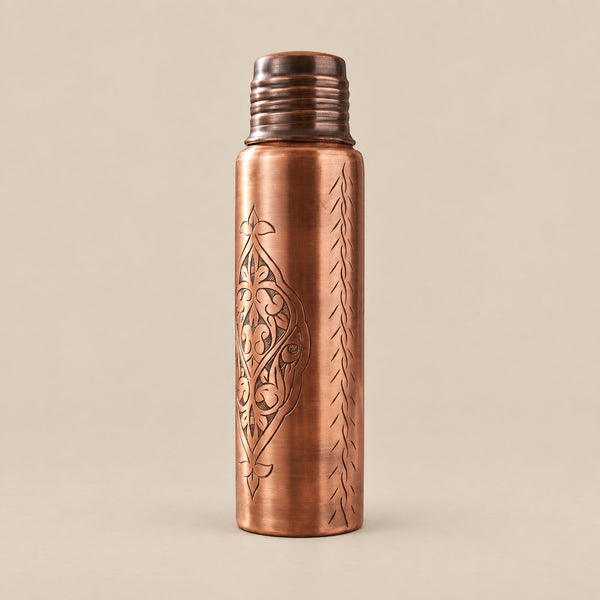
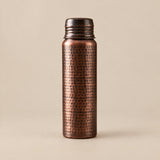
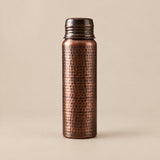
For example, green discoloration will not appear inside our Red-Engraved Handmade Tin-Lined Copper Water Bottle, 1 Liter as long as its interior tin layer remains intact. However, if the tin wears away over time with use, the copper underneath will be exposed and slight color changes may reappear in those spots. Regular drying and care are even more important for products with an unlined copper interior, such as the Black-Engraved Handmade Pure Copper Water Bottle, 750 ml.
Can you wash a copper water bottle in the dishwasher?
A copper water bottle should never be washed in the dishwasher. The high water temperature, harsh chemicals in detergents, and steam during the drying cycle can quickly darken the copper surface and turn it a mottled green-black color.
A dishwasher will also strip the tin from tin-lined products very quickly. Washing by hand with warm water, a neutral dish soap, and a soft sponge will extend the life of your water bottle.
Comparing Copper Water Bottles by Interior Surface
Copper water bottles have different care requirements depending on the interior lining and your usage habits. The table below compares unlined copper and tin-lined interiors:
| Feature | Unlined (Untinned) Interior | Tin-Lined Interior |
|---|---|---|
| Susceptibility to Green Discoloration | High (Reacts quickly if left damp) | Very low (The tin layer provides protection) |
| Ideal Use | Storing drinking water only | Drinking water and cold beverages |
| Cleaning Frequency | Weekly natural care is recommended | Light cleaning as stains appear is sufficient |
| Care Method | Lemon and salt or vinegar and salt | Soft sponge and warm water only |
What should you keep in mind to prevent green discoloration on a copper water bottle?
Preventing green discoloration on a copper water bottle is easy with the right usage habits. Follow these guidelines to keep your bottle looking as bright as the day you bought it for years to come:
- Be sure to empty your bottle at the end of the day, and don’t leave the same water in it for days.
- After use, rinse the inside, turn the bottle upside down to let it dry completely, then leave it uncapped to air out.
- Make a habit of drinking the water you filled the bottle with before going to bed the night before.
- Do not leave your bottle in direct sunlight or in excessively damp places.
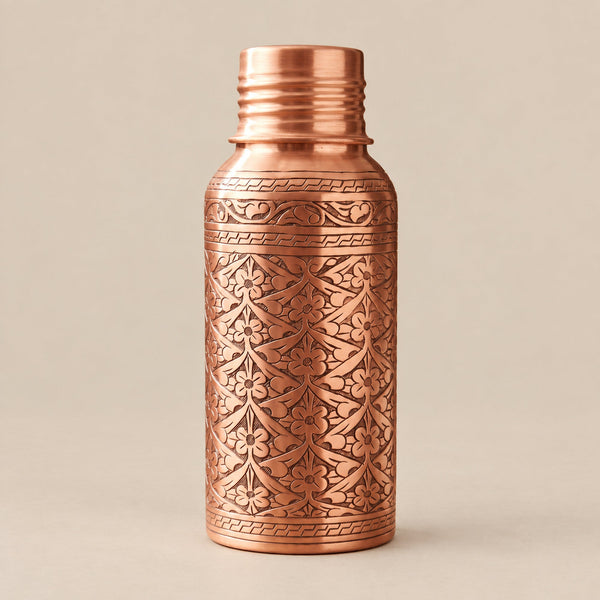
- If you use larger traditional vessels for serving alongside your bottles, such as Pitchers or the Daisy-Pattern Hand-Engraved Pure Copper Water Bottle, 1.6 Liters, apply the same drying routine to all your handmade products.
With proper care, you can enjoy your pure copper water bottles, shaped using traditional methods in our workshop, for many years and bring the beauty of handcrafted work into your everyday life.
A Note from the Master Craftsman
On the pure copper products handcrafted by our artisans in our Gaziantep workshop, color changes that develop over time are the clearest sign of copper’s natural character. If you dry your copper water bottle completely with a soft cloth right after washing it, you can prevent stains and green discoloration from forming in the first place.
Products Mentioned in This Article


Frequently Asked Questions
Are green stains inside a copper water bottle poisonous?
This green patina, known as copper carbonate, is not directly poisonous unless consumed in large quantities, but it can affect the taste of drinking water. We recommend cleaning the bottle with salt and lemon and rinsing it before drinking from it.
Should a copper water bottle be cleaned every day?
There is no need for a thorough chemical or acidic cleaning every day; rinsing it with warm water and drying it thoroughly is enough for daily use. A more thorough salt-and-lemon treatment can be done every 2–3 weeks.
Can you put a copper water bottle in the refrigerator?
There is no problem with putting a copper water bottle in the refrigerator; thanks to copper’s conductivity, it cools water very quickly. However, if condensation forms on the outside after you take it out of the refrigerator and is not dried, it may stain the exterior.
Is tarnishing the same as green discoloration on a copper water bottle?
No. Tarnishing occurs when copper oxidizes through contact with air alone, causing its color to darken. Green discoloration is a more advanced stage of corrosion that occurs when moisture and carbon dioxide also contribute to the process.
Explore: Water Bottles
Best Sellers


