



What Should You Consider When Buying a Copper Flask?

In brief: When purchasing a copper canteen, it is essential to first consider whether the product is handmade from pure copper, whether the interior surface is tinned, and the quality of the craftsmanship. The canteen's volume and design, suitable for your intended use, are also decisive factors for a long-lasting and pleasant experience.
- Genuine copper canteens distinguish themselves through their weight, homogeneous color, and hand-worked features such as hammer marks.
- For food safety, the interior surface of copper canteens that comes into direct contact with beverages must be tin-coated, and acidic drinks should not be kept in them for long periods.
- When choosing a handmade copper canteen, pay attention to its thickness, the details of the engravings, and the sturdiness of the handle and lid connections.
When purchasing a copper canteen, it is essential to first consider whether the product is handmade from pure copper, whether the interior surface is tinned, and the quality of the craftsmanship. The canteen's volume and design, suitable for your intended use, are also decisive factors for a long-lasting and pleasant experience. As a workshop keeping the deep-rooted copper-smithing tradition of Gaziantep alive, we wanted to guide you in making the right choice as we bring this ancient art into your homes with the experience of our masters.
How to Recognize a Pure Copper Canteen?
A pure copper canteen stands out for its quality and durability. There are a few key tips for identifying genuine copper. Unfortunately, there are various alloys or copper-plated products on the market. However, genuine handmade pure copper reveals itself immediately.
- Weight and Density: Pure copper is heavier than other metals. It should feel solid and substantial when you hold it in your hand. Lightweight and thin-walled products are usually not pure copper or have not been crafted with sufficient thickness. The thickness of the copper sheets we use in our workshop directly affects both the product's durability and its heat retention. For example, a 750 ml canteen, such as a round silver-tinned canteen, should have a noticeable weight even when empty.
- Color and Luster: Pure copper has a unique, warm reddish-brown hue. Its surface should be slightly glossy, but instead of an overly polished, artificial shine, it should exhibit a natural radiance. It is normal for it to oxidize and acquire a patina over time as it comes into contact with air; this is a natural property of copper and indicates its value.
- Non-magnetic: Copper is not a magnetic metal. If the canteen you are holding interacts with a magnet, it is likely not copper or is made from an alloy containing magnetic metals like iron. This simple test is a good starting point to determine if the product is pure.
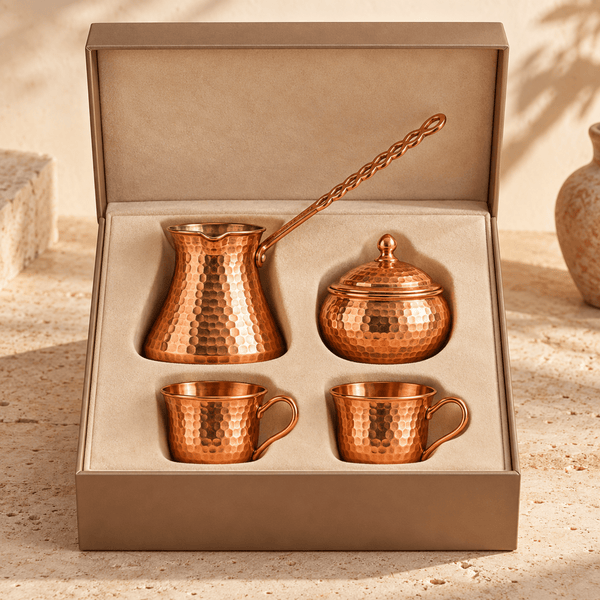
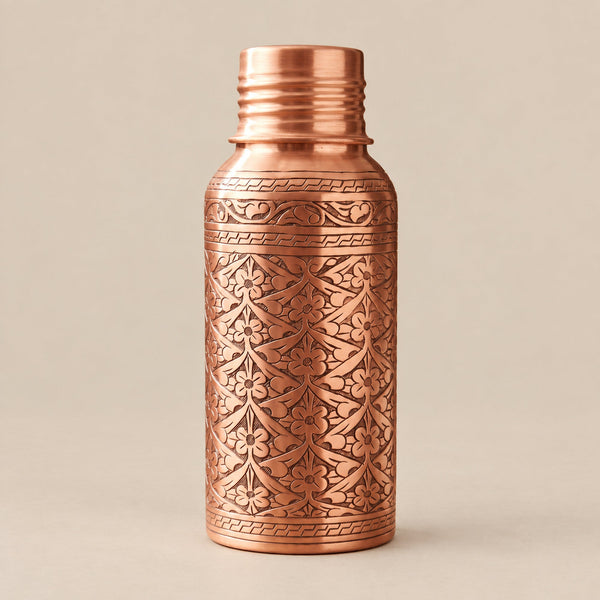
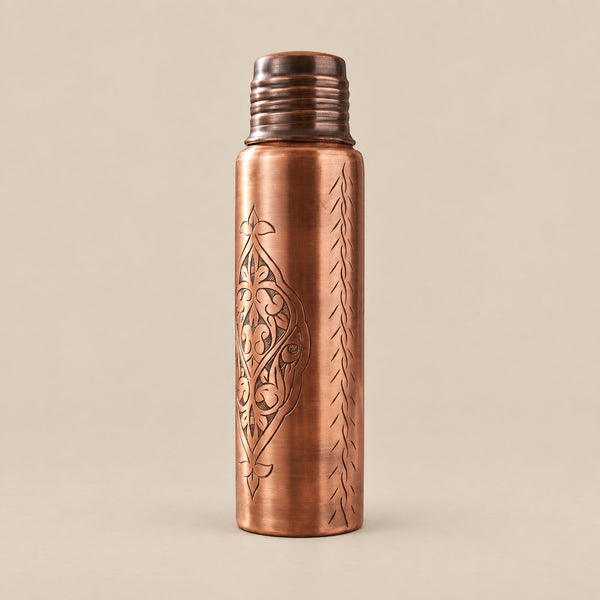
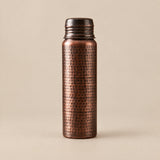
- Hammer Marks and Handcraftsmanship: One of the most prominent features of handmade pure copper products is that they bear the marks of the masters' hammers. These marks are unique touches that set each piece apart from machine-made products. Whether the marks are regular or irregular does not matter; what is important is that they serve as evidence of the effort and craftsmanship applied while shaping the copper. For instance, the engravings on products like the black tulip-patterned canteen are some of the finest examples of this hand-work.
Why is Tinning Important in a Copper Canteen?
If you are buying a copper canteen that will come into direct contact with beverages, it is vital that its inner surface is tinned. Tin coats the interior of the copper to ensure food safety and extends the life of the product.
Copper can react when it comes into prolonged contact with certain acidic foods and drinks (such as lemon juice, vinegar, and tomato juice). These reactions can lead to the oxidation of the copper and a change in the taste of the drink. Tin coating prevents these types of reactions, allowing you to consume your beverages safely. We traditionally tin the interior surfaces of our kitchenware; this is not just an aesthetic choice, but also knowledge of health and safety passed down through generations. All copper canteens, pitchers, and cups produced in our workshop in Gaziantep and designed for beverages are coated with food-grade pure tin.
The quality of the tin coating is also important. A good tin coating should cover the interior surface of the canteen smoothly and homogeneously. The thickness of the tin layer and its strong adhesion to the copper are critical for long-term use. The tinning process is an art that requires mastery, and our masters in Gaziantep have great experience in this regard. If you notice any wear or tarnishing in the tin of your canteen over time, you should definitely have it re-tinned by an expert copper-smith. When this process is done regularly, the lifespan of your copper canteen can last for generations.

What Makes Handmade Copper Canteens Different?
Handmade copper canteens hold a value far distinct from mass-produced items. Each one carries the labor, experience, and soul of its maker. These differences are evident in both aesthetics and functionality.
| Feature | Handmade Copper Canteen | Mass-Produced (Factory) Canteen |
|---|---|---|
| Craftsmanship | Each is unique, featuring hammer marks and skillfully worked details. It carries artistic value. | Generally produced with smooth surfaces in standard molds. Contains no personal touch. |
| Material Quality | Generally produced from high-purity and thicker copper sheets. High durability. | Thinner copper sheets or copper alloys may be used. Durability and heat retention capacity may be low. |
| Durability and Longevity | Can be used for generations with proper care. More resistant to impacts. | May have a shorter lifespan, more prone to scratching and deformation. |
| Heat Conduction and Retention | Retains the temperature of the beverage for longer thanks to the thick copper. | May lose or conduct heat quickly due to its thinner structure. |
| Value | Can gain antique value over time; seen as a cultural and artistic investment. | Usually carries only utility value. |
In our workshop in Gaziantep, every daisy-patterned canteen or any of our other best-sellers comes to life through the meticulous hand-work of our masters. Every stage, such as hammering the copper sheet, shaping it, engraving the patterns, and tinning, requires great attention and experience. This process not only yields a product but also sustains a tradition thousands of years old. A handmade canteen is not just a vessel for carrying water; it is also a work of art and a piece of heritage.
How to Maintain and Clean a Copper Canteen?
To keep your copper canteen shining like the first day and accompanying you for many years, it is very important to know the correct maintenance and cleaning methods. Improper practices can cause the copper to tarnish, scratch, or the tin coating to be damaged.
- Hand Washing is Essential: Copper products should never be washed in the dishwasher. The high temperature and harsh detergents of the dishwasher can cause the copper to lose its natural shine, tarnish, and even the tin coating to wear off. Wash your canteen by hand using warm water and a soft sponge or cloth. Heavily chemical cleaners and bleach should definitely not be used.
- Natural Polishing Methods: Copper can naturally oxidize and tarnish over time. You can use natural methods to remove this tarnishing and restore your canteen's shine. A mixture of lemon and salt or vinegar and flour is among the most well-known and effective methods. Add salt to a little lemon juice to create a paste and apply it to the outer surface of the canteen with a soft cloth. After waiting a few minutes, rinse thoroughly with warm water and dry with a soft cloth. You can also perform the same process with a mixture of vinegar and flour. When cleaning the inner surface of your canteen, take care not to damage the tin coating; rinsing the inside with just warm water is usually sufficient.
- Drying and Storage: After washing your canteen, make sure to dry it thoroughly. Leaving it damp can cause water spots to form and accelerate oxidation. Store your canteen in a dry and airy place, away from direct sunlight. If you will not be using it for a long time, you can wrap it in a cloth that prevents air from entering or keep it in a closed cabinet.
- Acidic Content Warning: As mentioned before, do not keep acidic drinks (such as lemonade, fruit juices, vinegar) inside copper canteens for long periods. Such drinks can damage the tin coating or react with the copper if no coating is present. It is recommended to use your canteen generally for water or beverages with low acidity.
How Should Volume and Design be Determined When Choosing a Copper Canteen?
Your personal needs and usage habits play a major role when choosing a copper canteen. Volume and design directly affect the enjoyment you will get from your canteen.
- Volume Requirement: Consider what you will use the canteen for. Is it for your daily water consumption or for serving on special occasions?
- Small Volumes (500 ml - 750 ml): Ideal for daily use, the gym, or short walks. It is lightweight and easy to carry. For example, smaller versions of our silver-colored handmade hammered tinned pure copper canteen 1.6 L could fall into this category (although the product in the link is 1.6L, it was used to emphasize this volume variety).
- Medium Volumes (1 Liter - 1.5 Liters): More suitable for long periods of desk work, travel, or picnics. It can meet the ideal daily water requirement for many people.
- Large Volumes (1.5 Liters and above): Can be preferred for families, long nature walks, or general use at home. Offers the need for less refilling.
- Design and Aesthetics: Copper canteens come with different engravings, hammering techniques, and coating colors. You can choose the one that suits your taste from traditional motifs, modern lines, or minimalist designs.
- Traditional Engravings: Patterns inspired by Gaziantep's rich cultural heritage, created with hand-carving or hammer-beating techniques, add an authentic feel to your canteen.
- Plain and Simple Models: For those who prefer a minimalist look, plain, shiny, or matte finish models may be suitable. These models highlight the natural beauty of the copper itself.
- Coating and Color Variety: Besides the natural color of copper, there are different options available, such as matte black looks obtained through oxidation or silver-colored tinned outer surfaces. You can make a choice that matches your personal style or kitchen decor.
- Ease of Carrying and Lid Type: Whether the canteen has a handle or a carrying strap affects how portable it is. A screw-top, hinged, or simple stopper lid is important for the canteen's leak-proof quality and ease of use. If you are going to use it outdoors in particular, choosing a leak-proof lid and a sturdy carrying mechanism would be wise.
We hope this information helps you make the most accurate copper canteen choice for yourself or your loved ones. With our copper-smithing tradition that has continued for generations in Gaziantep, you can discover our canteens—each handcrafted with care by our masters—and our other home gift sets to add both a traditional touch and a healthy experience to your home. Remember, a copper canteen is not just a vessel, but also a carrier of a story and a culture.
Master's Note
In our workshop, every copper canteen is shaped by the hands of our masters with hundreds of hammer blows. This dedicated craftsmanship not only adds aesthetic value but also ensures the durability and longevity of the canteen. You will feel the difference of genuine hand-craftsmanship when you touch and use it.
Products Mentioned in the Article


Frequently Asked Questions
Does a copper canteen rust?
Pure copper does not rust, but over time, it oxidizes when in contact with air to form a natural tarnish (patina). This is an indicator of the product's naturalness and can be removed with appropriate cleaning methods.
Can hot water be put into a copper canteen?
Yes, hot water can be put into a copper canteen. Since copper conducts heat well, it will maintain the temperature of the water inside for a while. However, be careful as the outer surface will also heat up.
What should I do if the tin coating inside my copper canteen peels off?
If the tin coating inside your copper canteen peels or wears off, you need to have it re-tinned by a master copper-smith for food safety reasons. It is not recommended to keep acidic drinks in a copper product that does not have a tin coating.
Is a copper canteen suitable as a gift?
Absolutely! Copper canteens are a very special and meaningful gift option with high traditional and aesthetic value. Especially a handmade and high-quality copper canteen leaves a lasting memory.
Do the engravings on the outer surface of the canteen fade over time?
The engravings on the outer surface of handmade copper canteens retain their first-day beauty for many years with correct use and care. It is important to avoid using abrasive cleaning materials and to clean them gently.
Discover: Canteens
Best Sellers


